Responsible Gambling in Greyhound Racing: Staying in Control
Best Greyhound Betting Sites – Bet on Greyhounds in 2026
Loading...
Greyhound racing runs multiple meetings every day, seven days a week, with races every fifteen minutes from morning to night. For a bettor who enjoys the sport, that availability is a feature. For a bettor who’s struggling with control, it’s a trap. The frequency, the speed, and the constant accessibility of greyhound betting make it one of the easiest forms of gambling to lose yourself in — which is precisely why responsible gambling practices matter here as much as anywhere in the betting landscape.
This isn’t a lecture. It’s a practical guide to the tools and habits that keep betting within the boundaries of something you do for enjoyment rather than something that does damage to your finances, your relationships, or your mental health. Every licensed UK bookmaker is required to provide responsible gambling tools. The question is whether you use them — and whether you recognise the point at which using them stops being optional.
Setting Deposit Limits and Loss Limits
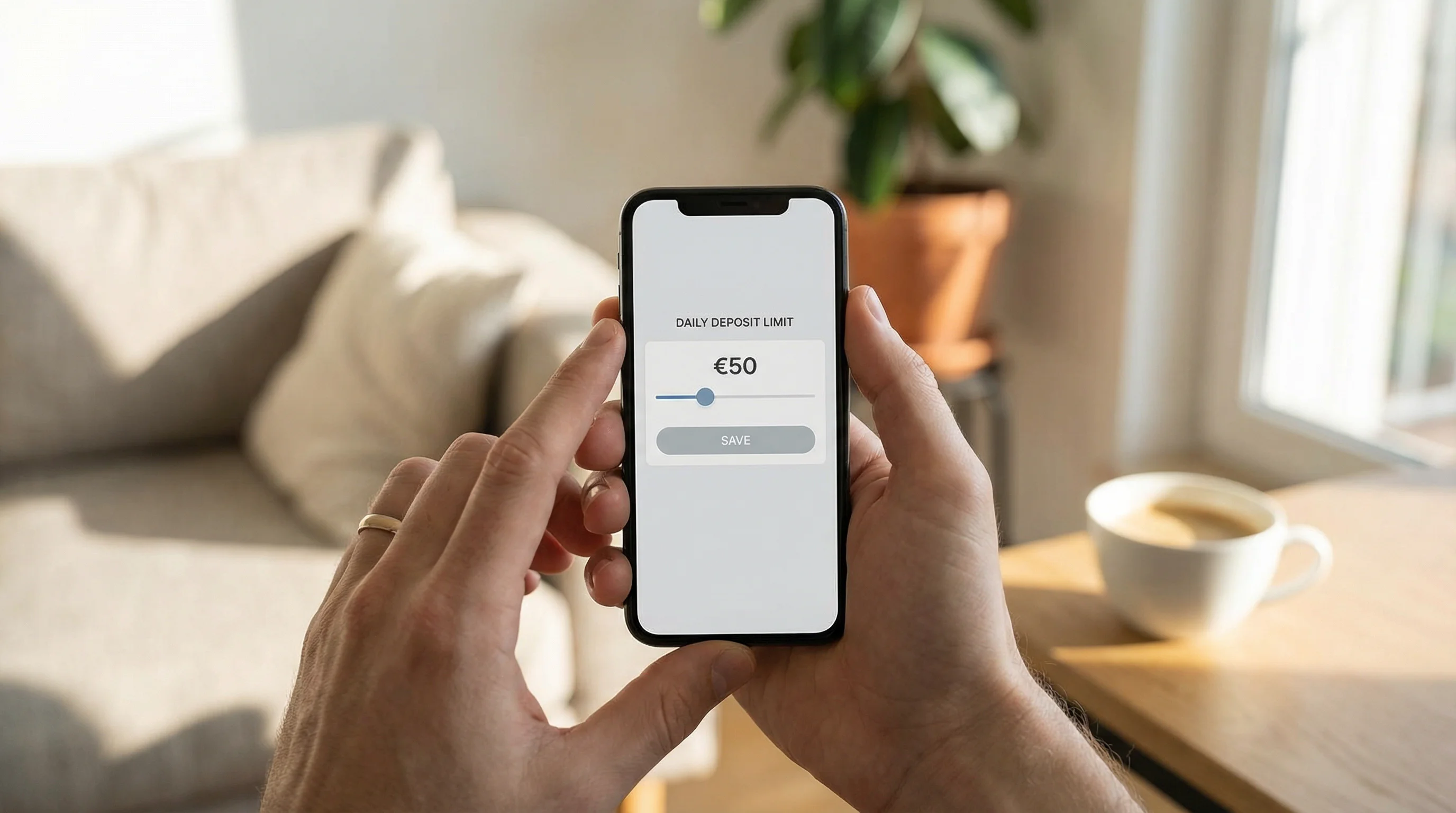
Every major UK-licensed bookmaker offers deposit limits — a cap on how much money you can add to your account within a set period. You choose the amount and the timeframe: daily, weekly, or monthly. Once the limit is reached, you cannot deposit more until the period resets. The limit is enforced by the platform, not by your willpower, which is what makes it effective.
Loss limits work on a similar principle but track how much you’ve actually lost rather than how much you’ve deposited. Some operators offer net loss limits that account for winnings within the same period, giving a more accurate picture of your financial position rather than just monitoring deposits. Setting a loss limit means that when your losses reach the threshold you’ve defined, the account restricts further betting activity until the period expires.
The practical step is to set these limits before you need them. Deciding your comfortable loss ceiling on a calm Tuesday afternoon is a far better decision than trying to set one at eleven at night after a bad run. Most bettors overestimate their tolerance for losses and underestimate how quickly small stakes accumulate. A two-pound bet every race across a twelve-race evening card is twenty-four pounds — and if you’re betting more than one bet per race, or increasing stakes to recover losses, that figure climbs fast.
Reducing a deposit limit takes effect immediately at most bookmakers. Increasing it requires a cooling-off period — typically twenty-four to forty-eight hours — before the new higher limit becomes active. That delay is deliberate. It prevents you from raising the limit in the heat of the moment, which is exactly when the temptation to do so is strongest.
Self-Exclusion and Cooling-Off Tools
Self-exclusion is the strongest tool available. When you self-exclude, you ask the bookmaker to close your account and prevent you from reopening it for a fixed period — typically six months, one year, or five years. During the exclusion period, you cannot place bets, deposit funds, or access your account. The bookmaker is legally required to enforce the exclusion and to take reasonable steps to prevent you from circumventing it.
GAMSTOP is the UK’s national self-exclusion scheme for online gambling. Registering with GAMSTOP excludes you from all UK-licensed online gambling operators simultaneously. One registration covers every bookmaker, casino, bingo site, and online gaming platform licensed by the UK Gambling Commission. The minimum exclusion period is six months, with options for one year and five years. Registration is free and can be done at gamstop.co.uk (GAMSTOP Terms of Use).
For bettors who aren’t ready for full self-exclusion but need a break, most bookmakers offer cooling-off periods — shorter breaks of twenty-four hours, forty-eight hours, one week, or one month during which your account is suspended. These are sometimes called “time outs” or “reality checks” and can be activated from the responsible gambling section of your account settings. A cooling-off period is a less permanent step than self-exclusion, but it serves the same purpose: putting distance between you and the betting interface when you recognise that continuing isn’t in your interest.
The hardest part of using these tools is the moment of recognition — accepting that you need them. There’s no shame in that recognition. The tools exist because the gambling industry acknowledges that its products carry risk, and because regulation requires operators to provide mechanisms for managing that risk. Using them is a sign of awareness, not weakness.
Recognising Problem Gambling Warning Signs
Problem gambling doesn’t announce itself with a single dramatic moment. It develops gradually, and the signs are often easier for others to spot than for the person experiencing them. But there are patterns that, if you’re honest with yourself, are identifiable — and recognising them early is the difference between a temporary problem and a lasting one.
Chasing losses is the most common warning sign in greyhound betting. You lose on the first few races, so you increase your stakes on the later races to recover. The later bets are less considered, driven by the desire to get back to even rather than by genuine analysis. If you catch yourself raising stakes specifically because you’re behind, that’s chasing — and chasing almost always makes the loss deeper, not shallower.
Betting with money you can’t afford to lose is a clear escalation. When the betting bankroll starts drawing from funds allocated to rent, bills, or other essential expenses, the activity has moved beyond entertainment. Similarly, borrowing money to gamble — whether from a credit card, an overdraft, or another person — is a signal that the betting is no longer operating within sustainable financial limits.
Emotional changes around gambling are also significant. Irritability when you can’t bet, anxiety about results, secrecy about how much you’re spending, and loss of interest in activities that used to matter are all behavioural markers that suggest gambling has shifted from recreation to compulsion. These signs don’t mean you’re a bad person. They mean the activity has developed a pattern that needs attention.
If you recognise these patterns in yourself, the most productive step is to act on that recognition rather than rationalise it away. Set a limit, take a cooling-off period, talk to someone. The tools described in this article exist specifically for this moment, and they work better when used early rather than after the damage is done.
UK Gambling Commission Resources
The UK Gambling Commission (UKGC) regulates all licensed gambling in Britain and requires operators to promote responsible gambling as a condition of their licence (gamblingcommission.gov.uk). The Commission’s website provides information on player rights, complaint procedures, and the obligations that bookmakers owe to their customers. If you believe an operator has failed to meet its responsible gambling obligations — by not providing tools, not enforcing limits, or not intervening when signs of problem gambling were apparent — the Commission accepts complaints through its official channels.
Beyond the regulatory framework, several independent organisations provide support for people affected by gambling harm. GamCare offers free advice, counselling, and support through its helpline and online chat service. The National Gambling Helpline, operated by GamCare, is available around the clock and can be reached by phone on 0808 8020 133 (gamcare.org.uk). Gamblers Anonymous provides peer support through meetings across the UK. These services are free, confidential, and available to anyone who needs them — whether the issue is with greyhound betting, other gambling, or a combination.
Bookmakers are also required to provide direct links to these support services within their platforms. If you can’t find the responsible gambling section in your bookmaker’s app or website, it’s typically in the account settings or the footer of the homepage. The information should be accessible within a few taps. If it isn’t, that itself is worth reporting to the Commission, because accessibility of responsible gambling tools is a licence condition, not a suggestion.
The Best Bet You’ll Ever Make Is Knowing When to Stop
Greyhound betting, at its best, is an intellectual exercise that combines data analysis, pattern recognition, and tactical decision-making. It’s a hobby that rewards knowledge and discipline, and it can be genuinely enjoyable for people who approach it with clear eyes and controlled stakes. None of that changes the fact that it involves real money, real risk, and a product designed to be available around the clock.
The tools in this article are not afterthoughts. They’re the infrastructure that makes sustainable betting possible. Deposit limits prevent a bad night from becoming a bad month. Cooling-off periods create breathing space when the impulse to keep going overrides the judgement that says stop. Self-exclusion is there for when the other tools aren’t enough.
Using them doesn’t mean you’ve failed at betting. It means you’ve succeeded at the part that matters more — keeping the activity in its proper place. The best bettors are not the ones who win the most. They’re the ones who know when to stop, who treat the bankroll as a budget rather than a bottomless resource, and who walk away from a night’s racing with their finances and their wellbeing intact. That’s not a platitude. It’s the most practical advice in this entire article.