Open Races vs Graded: Key Differences for Greyhound Bettors
Best Greyhound Betting Sites – Bet on Greyhounds in 2026
Loading...
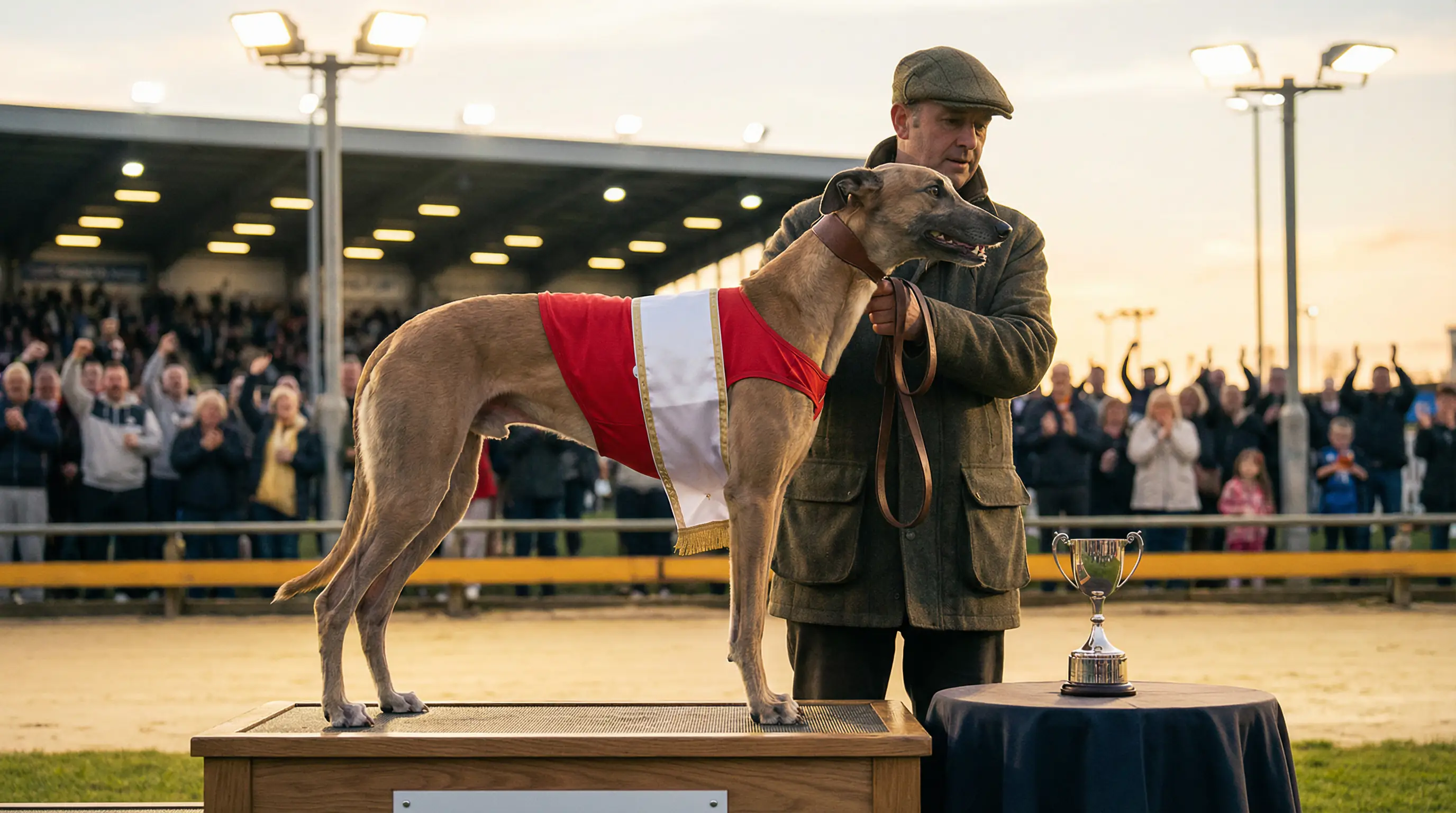
Graded races are the bread and butter of the UK greyhound calendar — the nightly fare at every licensed track, where dogs are sorted by ability and matched against opponents of similar standard. Open races are something else entirely. They sit above the grading ladder, invite entries based on merit rather than classification, and represent the highest level of competition the sport has to offer. For bettors, the distinction matters because the two race types demand different analytical approaches and produce different kinds of betting opportunities.
Most greyhound punters bet almost exclusively on graded racing, because that’s where the volume is. But open races — particularly Category One events — attract the best dogs, the largest prize money, and the most informed betting markets. Understanding how open races differ from graded races, and what that means for the way you assess form and price, is a step that separates surface-level betting from something more considered.
What Defines an Open Race
An open race has no grade restriction. Where a graded race is confined to dogs within a specific band — A3, B1, D4, and so on — an open race accepts entries from any grade level, provided the dog meets the competition’s entry criteria. In practice, this means open races attract the strongest available dogs, because trainers enter their best runners to compete for the superior prize money and prestige that open events carry.
The absence of a grade ceiling changes the competitive dynamic fundamentally. In a graded race, the field is designed to be relatively even — dogs of similar ability racing against each other. In an open race, the range of talent in the field can be wider. A dog that dominates A1 graded company at its home track might face dogs from other tracks that are equally dominant at their own venues. The open race is where those parallel hierarchies collide, and the result is a contest that can’t be predicted purely from graded form.
Open races are typically associated with named competitions — events with histories, trophies, and calendars that trainers plan around. The English Greyhound Derby (Towcester Racecourse), the St Leger, the Oaks, and dozens of other annual events are all run as open races. They are the sport’s showpieces, and they generate the most public attention, the deepest betting markets, and the largest field entries of any races on the circuit.
Not every open race is a major event, though. Some tracks host smaller open races as part of their regular programme, offering enhanced prize money and a step up from graded competition without the scale of a Category One event. These lower-tier opens still attract above-average fields and are worth identifying on the card, because the form dynamics differ from the graded races surrounding them on the same night’s programme.
Category Levels: OR1, OR2, OR3
Open races are classified into three category levels by the GBGB (GBGB Rule 64). Category One (OR1) is the highest tier, reserved for the most prestigious events with the largest prize funds. Category Two (OR2) sits below, and Category Three (OR3) is the entry level of open racing. The category determines the minimum prize money, the event’s standing in the official calendar, and the quality of the field it’s expected to attract.
Category One events are the marquee competitions. The English Greyhound Derby at Towcester (GBGB), the St Leger, and the Oaks are all OR1 races. These events attract national entries, with trainers from across the country putting forward their best dogs. The prize money is the highest in the sport, the media coverage is at its peak, and the ante-post betting markets open weeks or months in advance. There are around fifty-five Category One events across the calendar year, spread among the GBGB-licensed tracks (GBGB 2025 calendar).
Category Two events are significant but carry less weight. They attract strong regional fields and offer prize money above the graded norm, but they don’t command the same national attention as OR1 competitions. For bettors, OR2 events are often underappreciated — the fields are competitive, the form is generally solid, and the betting markets are less intensely scrutinised than Category One races, which can create pricing inefficiencies.
Category Three events are the threshold of open racing. They offer a step up from graded competition without the full weight of a major event. OR3 races are common at tracks that host a busy fixture list, and they give trainers the opportunity to test their dogs against open-race fields without committing to the highest level. For form students, a dog’s performance in OR3 company is a useful indicator of whether it’s ready for OR2 or OR1 events later in the season.
How Open Race Fields Are Assembled
Open race entries work differently from graded races. In graded competition, the racing manager at each track assembles the fields from the pool of dogs resident at or available to that venue, slotting them into the appropriate grade. In open races, the entry process is more deliberate. Trainers nominate their dogs for specific events, often weeks in advance, and the competition’s organiser assembles the field from the nominations based on published criteria — typically recent form, graded times, and previous open race performance.
For major Category One events, the entry process may include qualifying rounds. The English Greyhound Derby, for example, runs heats over several weeks before the semi-finals and final. Dogs must qualify through these rounds, and the field narrows progressively until the finalists are determined by on-track performance. This multi-round structure means that by the time the final arrives, the field has been tested under competition conditions — which gives bettors a rich body of form data from the event itself, not just from prior graded runs.
The nomination and qualification process also means that open race fields are more intentionally constructed than graded fields. Every dog in the race is there because its trainer actively chose to enter it, which implies a level of kennel confidence that doesn’t necessarily apply to a midweek graded runner. In graded racing, dogs run because the schedule says they should. In open racing, dogs run because someone believes they have a chance. That distinction is subtle but relevant for how you weigh the field’s competitiveness.
Trap draws in open races are typically allocated by the competition organiser rather than the track’s regular racing manager. The allocation may follow different conventions — seeded draws, random draws, or draws based on qualifying performance. Checking how the trap draw was determined for a specific open race is worth the effort, because the usual assumptions about draw-by-running-style may not apply.
Betting Implications of Open vs Graded
The betting market for open races behaves differently from graded markets. Open races attract more attention, more money, and more sophisticated analysis from the betting public. The prices tend to be tighter and more efficient, because the races are better covered by form analysts, tipping services, and professional bettors. Finding mispriced selections in a Category One final is harder than finding them in a Tuesday morning A4 at a provincial track.
Form assessment also changes. In graded races, you’re comparing dogs that have been running against similar opposition at the same track, often over the same distances. The form is internally consistent. In open races, you’re comparing dogs from different tracks, different grading systems, different trainers, and potentially different distances. A dog’s A1 form at one venue doesn’t translate directly to how it’ll perform at a different track in an open race field. You need to adjust for track characteristics, distance suitability, and the overall standard of the competition.
Ante-post markets add another dimension. For major open races, bookmakers offer prices weeks or months before the event. These early prices reflect limited information — the dog’s graded form, its trainer’s intentions, and the market’s assessment of the likely field. As qualifying rounds are completed and more information becomes available, the prices shift. Bettors who follow the qualifying process closely can identify value in the ante-post market that the early prices didn’t account for, particularly when a lesser-known dog performs strongly in the heats.
The volatility of open race results is also higher than in graded racing. Because the fields bring together the best dogs from across the country, the margins between runners are often razor-thin. Upsets are more common, and the favourite’s win rate in Category One events is lower than in the average graded race. That increased variance means that longer-priced selections in open races carry more value than their price alone suggests, provided your analysis supports the selection independently of the odds.
Different Arena, Different Rules
Open racing and graded racing share a sport, but they operate under different competitive logic. Graded races exist to create evenly matched fields through systematic classification. Open races exist to identify the best dogs by removing those classifications entirely. The bettor who approaches both with the same analytical framework is missing the distinction that defines each type.
In graded racing, your edge comes from understanding the grading system — how dogs move between levels, where the racing manager’s discretion creates opportunities, and how the local hierarchy at a specific track translates into form that’s reliable within that context. In open racing, your edge comes from comparative analysis across tracks and training operations, from reading qualifying round form as a progression rather than a snapshot, and from understanding that the market for major events is more efficient but also more volatile than the market for routine graded cards.
Both types of racing reward literacy and discipline. The currency of that literacy is different in each arena, but the principle is the same: understand the competitive framework, read the form within that framework, and bet only when your assessment diverges meaningfully from the market’s. Whether the race is a Wednesday morning A5 or the English Greyhound Derby final, that process doesn’t change. The stakes do.