Greyhound Trainers: How They Influence Race Results
Best Greyhound Betting Sites – Bet on Greyhounds in 2026
Loading...
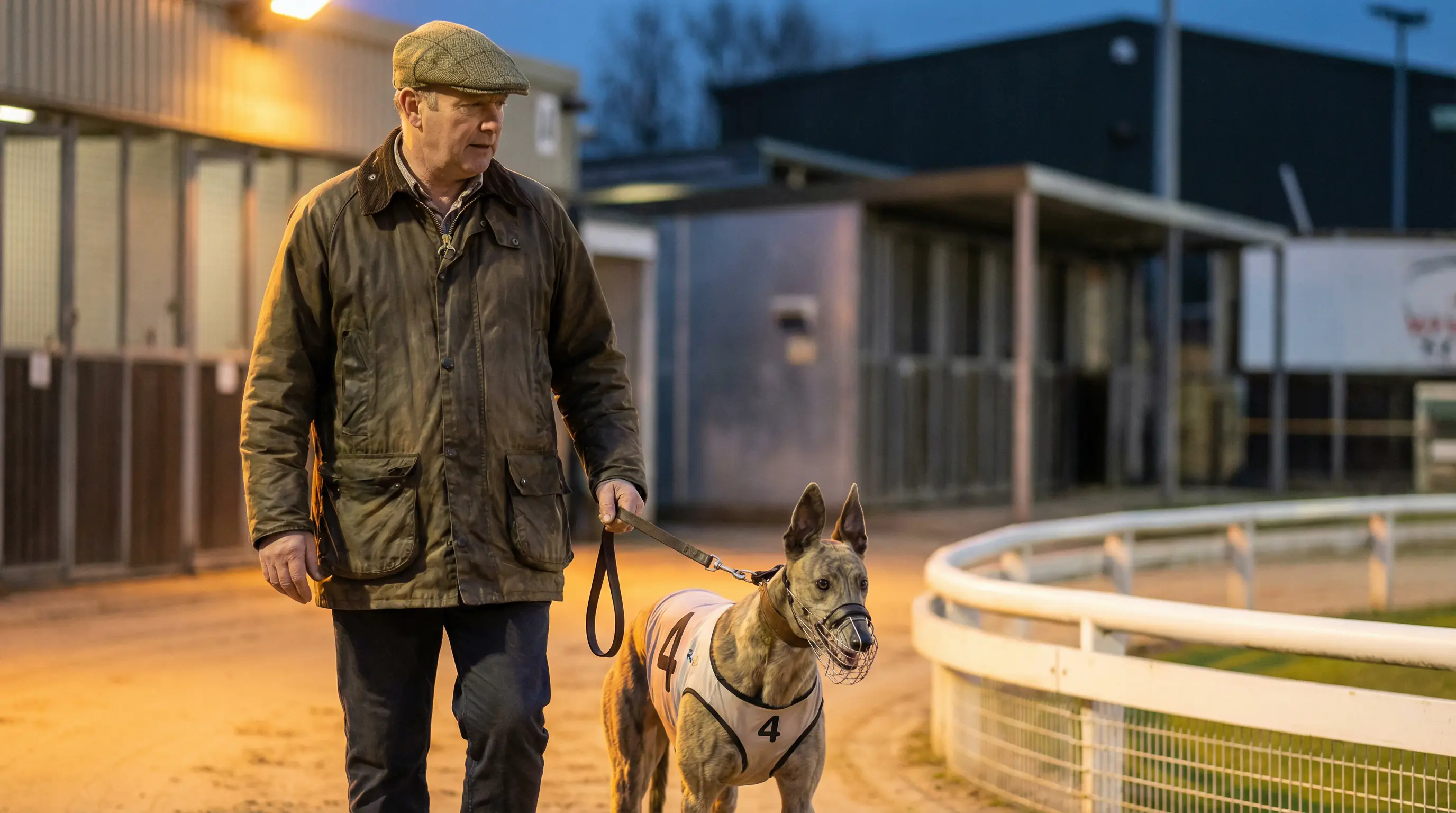
Most greyhound bettors focus on the dog. That’s reasonable — the dog is the one running. But behind every runner on the racecard is a trainer who decided when to run it, where to run it, over which distance, and at which grade. Those decisions shape the competitive context before the traps even open, and they’re made by someone whose livelihood depends on getting them right.
Trainer form is one of the most underused data points in greyhound betting. While horse racing punters routinely check trainer strike rates, course records, and seasonal patterns, greyhound bettors rarely give the trainer’s name more than a passing glance. That’s an edge left on the table. Trainers have patterns, specialities, and form cycles just like the dogs in their care. Learning to read those patterns adds a dimension to your analysis that most of the market ignores.
What Trainers Actually Do
A greyhound trainer is responsible for the day-to-day management of a kennel of racing dogs. That covers a broad range of tasks: feeding, exercise, injury management, trial runs, race entries, and the tactical decisions about when and where each dog competes (GBGB). The trainer determines the dog’s racing schedule, selects which meetings to enter, requests specific distances and grades, and manages the dog’s physical condition leading into each race.
This is more consequential than it sounds. A dog that is entered at the right track, over the right distance, in the right grade, at the right moment in its fitness cycle has a meaningfully better chance of performing well than the same dog entered carelessly. Timing is a skill. Some trainers are known for peaking their dogs for specific events — bringing a runner to its best form for a Category One competition or a valuable open race. Others take a more volume-oriented approach, running dogs frequently at their home track to accumulate wins and prize money in graded company.
Trainers also manage the dog’s weight, fitness, and recovery between races. A dog that runs every four or five days is on a different physical schedule than one that runs fortnightly. Some trainers rest dogs after a particularly hard race, giving them time to recover before the next entry. Others push through, running dogs on tight turnarounds. These patterns affect form in ways that the racecard numbers don’t always reveal directly, but that become visible when you track a kennel’s results over time.
The relationship between trainer and racing manager also matters. Trainers request trap positions and grades for their dogs, but the racing manager at the track has the final say. Experienced trainers who have a good working relationship with the racing staff at their home track are often better positioned to get favourable trap allocations and appropriate grade placements. That advantage is invisible on the racecard but real in its effect on outcomes.
Tracking Trainer Form and Strike Rates
Trainer strike rate — the percentage of runners that win — is the most direct measure of a trainer’s current effectiveness. A trainer with a 20 percent strike rate over the last month is producing a winner from roughly every five runners. That’s a strong figure in greyhound racing, where six-runner fields and graded competition make winning inherently harder than in less structured sports.
Strike rates fluctuate. Trainers go through hot and cold streaks just as dogs do, and the causes are often interrelated. A kennel with several dogs in peak condition at the same time will show an elevated strike rate. A kennel dealing with illness, injuries, or a batch of dogs between form cycles will dip. Tracking these patterns over rolling four-week or eight-week windows gives you a sense of which trainers are currently running their dogs well and which are in a quieter phase.
Form sites and results databases increasingly offer trainer statistics that make this tracking easier. You can filter by track, by distance, by grade, and by time period to see which trainers are performing above or below their long-term averages. A trainer who normally strikes at 15 percent but is currently hitting 25 percent over the last three weeks is worth following closely. Conversely, a trainer whose rate has dropped from 18 to 8 percent may be managing a kennel-wide issue that won’t resolve in one race.
Track-specific trainer form is particularly useful. Some trainers dominate at their home track — the one closest to their kennel, where they run most of their dogs. They know the track’s quirks, have established relationships with the racing manager, and their dogs are familiar with the surface and bends. A trainer’s strike rate at their home venue is often significantly higher than their overall rate, and that local edge is a genuine factor in race assessment.
Kennel Confidence: Reading the Signs
Some trainers peak their dogs for big races. Others run them into form. Knowing which is which is an edge that takes time to develop but pays repeatedly once you have it.
Kennel confidence — the sense that a trainer has a dog ready to perform at or near its best — manifests in several observable ways. A dog returning from a break with a trial time recorded is a signal that the trainer has tested the dog’s fitness before committing it to a competitive race. The trial time itself is useful data, but the fact that a trial was conducted tells you the trainer is being deliberate about the entry rather than routine.
Entry patterns also reveal intent. A trainer who normally runs a dog at B3 level but enters it in an A5 is making a deliberate step up. That decision suggests the trainer believes the dog is ready for stiffer competition — which, in turn, suggests the dog is in better form than its recent graded results might indicate. The reverse — dropping a dog that’s been competitive at a higher grade into a softer race — can signal a targeted attempt at a win, often to build confidence or to secure prize money at a lower level before stepping back up.
Timing around major events is the clearest expression of kennel confidence. In the weeks before a Category One competition or an open race with significant prize money, trainers will sometimes give their best dogs lighter schedules, easier races, or strategic rests. A dog that has been lightly raced in the fortnight before a major event, followed by a peak-race entry, is a dog that’s being prepared rather than managed. Recognising that preparation pattern, even when the recent form looks unremarkable, is one of the ways trainer analysis produces insights that pure form-figure reading misses.
Trainer Moves Between Grades and Tracks
When a trainer moves a dog to a different track, it’s rarely random. Track switches happen for reasons: a distance that suits the dog better, a grade structure that creates a favourable opening, a surface the dog handles well, or a major event that the trainer is targeting. Reading the intent behind a track move is a form of analysis that sits somewhere between form reading and detective work.
A dog arriving at a new track from a trainer with a strong record at the original venue is worth scrutinising. If the trainer has a pattern of moving dogs to specific tracks for specific reasons — say, switching a stayer from a short-circuit track to one that offers longer distances — the move itself is information. It tells you the trainer has identified an opportunity that the dog’s current track didn’t provide.
Grade manipulation is a less comfortable topic, but it exists at the margins. Trainers occasionally manage a dog’s grade position by entering it at tracks where the grading standard is softer, accumulating a record that positions it favourably when it returns to its home venue. This isn’t against the rules — each track grades independently — but it creates situations where a dog’s form figures at one venue don’t directly translate to another. Bettors who notice a pattern of strategic track-hopping in a trainer’s entries are seeing something the casual market usually misses.
The Name on the Racecard Matters More Than You Think
The trainer’s name appears on every racecard, next to the dog’s name and the trap number. Most bettors glance at it and move on. The ones who don’t — who track kennel form, note entry patterns, and recognise when a trainer is placing a dog with purpose — are working with information that the majority of the market disregards.
Trainer analysis isn’t a substitute for form reading, trap draw assessment, or pace analysis. It’s an additional layer that refines the picture those tools produce. A dog with solid form, a good draw, and a trainer in excellent current form is a stronger proposition than the same dog with the same form and a trainer whose kennel is in a cold spell. The difference isn’t always decisive, but it’s real, and in a sport where margins are measured in fractions of a second, real advantages accumulate. The name on the racecard is a data point. Start treating it like one.