Greyhound Forecast Betting: Straight and Reverse Explained
Best Greyhound Betting Sites – Bet on Greyhounds in 2026
Loading...
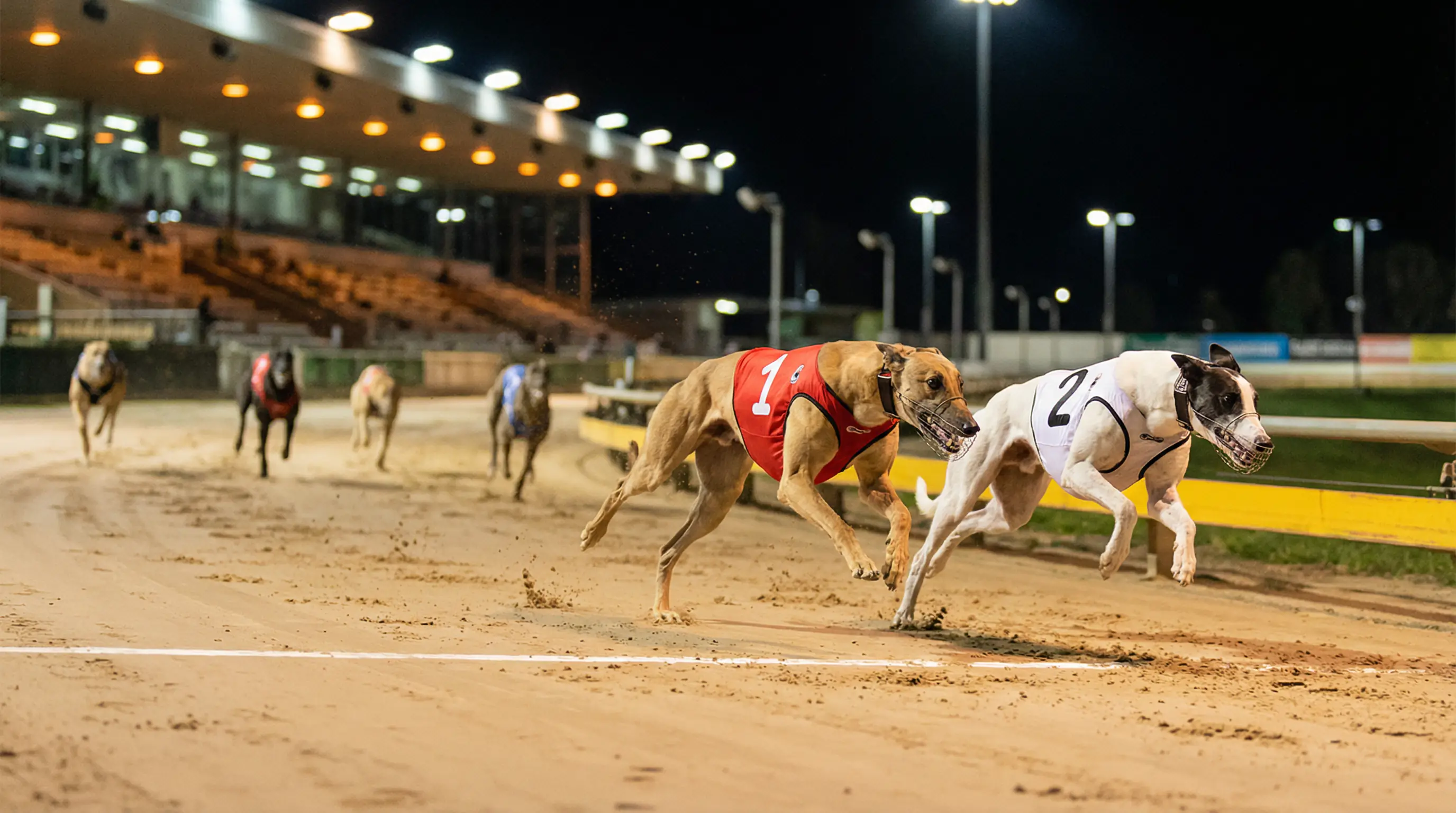
Forecasts are where greyhound betting starts to separate the casual from the committed. Instead of picking one dog to win, you’re predicting the first two finishers — and depending on the bet type, you may need to get the exact order right. The payouts reflect that difficulty. A straight forecast on two longer-priced dogs can return multiples of your stake that win bets rarely approach.
But the difficulty is real. In a six-runner field, there are thirty possible first-and-second combinations. Getting the top two in the correct order means you’re trying to be right about a 1-in-30 proposition. The reverse forecast relaxes the order requirement, and combination forecasts let you cover multiple selections, but each variation comes with a trade-off between coverage and cost. This article explains how each type works, when the maths favour each approach, and how to build forecast betting into a considered strategy rather than a speculative punt.
Straight Forecast Explained
A straight forecast requires you to predict the first and second finishers in the exact order. You name one dog to win and another to finish second. If those two dogs finish in those exact positions, the bet pays out. Any other combination — even if both dogs finish in the top two but in the wrong order — is a losing bet.
The payout on a straight forecast is not based on fixed odds in the way a win bet is. In UK greyhound racing, forecast dividends are typically determined by the tote pool or by a computer straight forecast calculation. The tote pool forecast collects all the money staked on every possible first-and-second combination, deducts a percentage for the operator, and divides the remainder among those who correctly predicted the result. The computer straight forecast uses a formula based on the individual win odds of the two dogs to generate a declared dividend. Either way, you don’t know the exact payout at the time you place the bet — you know the odds of each dog individually, but the forecast return depends on the specific combination and how the pool or formula settles.
This uncertainty is part of what makes straight forecasts appealing. Because the dividend fluctuates based on pool size and the popularity of each combination, unpopular results — two less-fancied dogs finishing first and second in an unexpected order — can produce very large returns. A straight forecast linking two outsiders can pay twenty, fifty, or even a hundred times the stake. The flip side is that linking two short-priced favourites in the obvious order will produce a modest dividend, because plenty of other bettors had the same idea.
The analytical challenge is genuine. You’re not just assessing which dog will win — you’re assessing which dog will finish second, and that requires a different layer of analysis. The second dog doesn’t need to be the second-best on form; it needs to be the one most likely to finish behind the winner given the specific dynamics of the race. Early pace, trap draw, running style, and how the first bend is likely to unfold all feed into that assessment.
Reverse Forecast Mechanics
A reverse forecast covers both possible orders of two selected dogs. Instead of naming one to win and one to finish second, you name two dogs and bet on them filling the top two positions in either order. It’s effectively two straight forecasts combined in a single bet, and it costs twice the unit stake accordingly.
If you place a five-pound reverse forecast, your total outlay is ten pounds — five on Dog A first and Dog B second, and five on Dog B first and Dog A second. If either combination comes in, the winning half pays out at the declared forecast dividend and the other half is lost. If neither combination comes in — because a third dog finishes in the top two — both halves lose.
The reverse forecast is a practical tool when you’ve identified two dogs that you believe will dominate the race but you’re uncertain about the order. This is a common situation in greyhound racing. Two dogs might stand out on form, but their relative finishing positions depend on the first bend — and the first bend is inherently less predictable than the overall form picture. The reverse forecast lets you express the opinion “these two dogs will fill the top two” without committing to the exact sequence.
The trade-off is straightforward: you’re paying double the stake for the flexibility. If your straight forecast analysis strongly favours one order — say, a front-running railer from trap one over a closer from trap five — the reverse forecast wastes money on the less likely permutation. But if the two dogs have similar pace profiles and the race dynamics could genuinely go either way, the reverse forecast is a reasonable hedge. It converts a coin-flip problem into a covered position, at the cost of halving the net profit compared to getting the straight forecast right.
Combination Forecasts
Combination forecasts extend the logic further. Instead of selecting just two dogs, you select three or more and cover every possible first-and-second combination among them. The number of bets — and the total cost — rises quickly as you add selections.
With three dogs, a combination forecast covers six permutations: each dog finishing first with each of the other two finishing second. A five-pound unit stake means a total outlay of thirty pounds. With four dogs, the permutations jump to twelve, costing sixty pounds at the same unit. Each additional dog adds more coverage but multiplies the cost proportionally.
The appeal of combination forecasts lies in competitive, open races where form suggests several dogs could finish in the top two but no clear order stands out. Instead of agonising over which exact pairing will fill the positions, you cast a wider net. If any two of your selected dogs finish first and second in any order, one of your bets pays out.
The risk is cost dilution. Your total outlay is spread across many permutations, and only one of them will win. The forecast dividend needs to be large enough to cover the cost of all the losing permutations and still leave a profit. In a race where the likely top-two finishers are short-priced, the forecast dividends tend to be modest, and a combination forecast covering three or four dogs at thirty or sixty pounds may return less than the total stake even when it lands. The bet works best when at least one of your selections is at a longer price, pushing up the dividend and improving the ratio of return to outlay.
Combination forecasts are a tool for specific situations, not a default approach. They’re expensive, they require large dividends to justify the cost, and they demand that you’re right about the general composition of the finish without needing to be right about the precise order. When those conditions align, they’re effective. When they don’t, they’re an efficient way to lose money across multiple permutations simultaneously.
Forecast Strategy: When Predictability Meets Reward
Forecast betting rewards a specific kind of analysis: the ability to read not just who will win, but how the race will unfold from front to back. That requires thinking about the race as a sequence of events rather than a single outcome.
The strongest forecast opportunities arise in races where the likely winner is identifiable but the runner-up is a less obvious choice. If the market favourite is heavily backed on the win and the second-place finisher is a mid-price or longer-price dog, the straight forecast linking those two may pay generously — because fewer people will have backed that exact combination. The favourite-plus-outsider straight forecast is one of the most reliably underpriced propositions in greyhound betting, provided your analysis supports the specific second-place selection.
Trap draw and running style are particularly important for forecast analysis. A strong front-runner from an inside trap is likely to lead. The question is which dog is most likely to track it home. That dog is usually one with a similar pace profile from an adjacent trap, or a closer with proven finishing speed. The race remarks from recent outings — “ran on well,” “stayed on,” “finished strongly” — help identify dogs that consistently fill second and third places without winning. Those consistent placers are forecast gold when paired with a likely winner.
The discipline required is to bet forecasts selectively. The temptation, particularly with combination forecasts, is to cover too many permutations and erode the potential profit before the race even starts. Skilled forecast bettors limit their stakes to races where the top-two picture is readable and the dividend is likely to justify the outlay. Not every race has a clear forecast opportunity. The ones that do are the ones where the form, the draw, and the pace all point in the same direction for two dogs — and where the market hasn’t already priced that combination tightly.
Two Dogs, One Market, Infinite Opinions
The forecast market in greyhound racing is a space where analytical depth gets rewarded more directly than anywhere else in the betting menu. Win betting tests whether you can pick the best dog. Forecast betting tests whether you can read the race — the entire race, from first bend to finishing line, from front-runner to closing second.
That’s a harder skill, and the payouts reflect it. Forecast dividends can be substantial precisely because most bettors either avoid the market or approach it casually, backing obvious combinations that the pool already reflects. The less obvious combinations — the ones supported by careful reading of trap draw interactions, pace profiles, and finishing patterns — are where the forecast market under-prices outcomes and over-rewards the bettors who do the work.
Forecast betting isn’t for every race. It’s not even for most races. But in the right race, with the right analysis, it’s the bet type that most directly translates your understanding of how a race will unfold into a financial return. The question isn’t just who wins. It’s who finishes behind them, and why.