Central Park Sittingbourne: Track Guide and Race Info
Best Greyhound Betting Sites – Bet on Greyhounds in 2026
Loading...
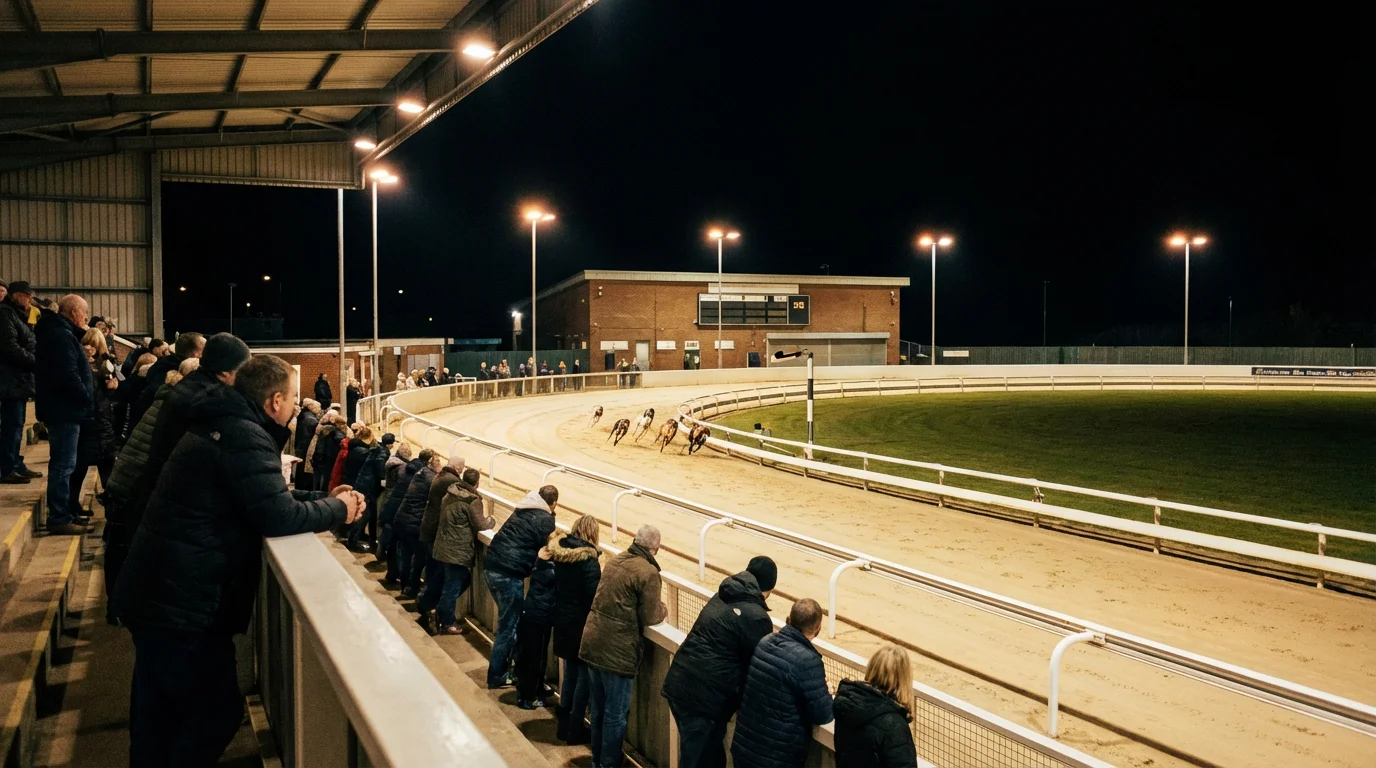
Central Park Stadium sits on Church Road in Sittingbourne, Kent — and for greyhound racing in the south-east, it’s the main event. Owned and operated by Arena Racing Company, Central Park runs one of the busiest schedules of any licensed track in the country, hosting five meetings per week across both morning and evening cards. For bettors who follow UK greyhound racing with any regularity, Central Park races appear on the card more often than not.
The track’s significance goes beyond volume. Central Park holds a GBGB licence, hosts Category One events that attract the best dogs in the country, and received a major renovation in 2023 that reshaped its racing distances and track profile. It’s also part of a media rights deal with Entain that ensures its races are streamed live to betting platforms nationwide. For a stadium in a small Kent town, that’s a reach that belies its postcode.
This profile covers what you need to know about Central Park as a racing venue: its history, the distances it races over, its meeting schedule, the major competitions it hosts, and the characteristics that make it a track worth understanding if you’re placing bets on the dogs.
Track History: From Football Ground to Greyhound Venue
The stadium was built for football, went bankrupt, and found its purpose with greyhounds. Central Park’s origins trace back to Sittingbourne Football Club, which used the Church Road site as its home ground. When the football club ran into financial trouble, the stadium was repurposed for greyhound racing in the mid-1990s, opening as a licensed track in 1995. It wasn’t a glamorous debut — the facilities were modest, the fixtures were local, and the track operated firmly in the shadow of London’s bigger venues.
Through the late 1990s and 2000s, Central Park built its reputation steadily. The track was well-maintained, the racing was competitive, and the location in Kent — accessible from London and the south-east — gave it a natural catchment area for both attendees and trainers. Several prominent kennels are based within reasonable distance of Sittingbourne, which meant the track attracted quality dogs without having to compete directly with the metropolitan stadiums.
The real turning point came when other tracks closed. When Wimbledon Stadium shut its doors in 2017 after decades of operation in south London, several major events needed new homes. Central Park absorbed some of that heritage, inheriting competitions with histories that stretched back far longer than the Sittingbourne venue itself. It was a moment that elevated Central Park from a solid regional track to something closer to a national fixture.
Arena Racing Company’s ownership brought further professionalisation. ARC runs a portfolio of greyhound and horse racing venues across the UK, and their investment in Central Park has been visible — most notably in the 2023 track renovation, which cost in the region of half a million pounds. That investment reflected a straightforward calculation: Central Park’s racing volume, media revenue, and betting turnover justified the spend. A track producing five meetings per week for broadcast to an entire nation of bookmakers isn’t a vanity project. It’s infrastructure.
Race Distances and Track Characteristics
After the 2023 renovation, Central Park races over new distances — and the old form data stopped being reliable. That’s a point worth absorbing if you’re using historical results to assess current runners. The renovation didn’t just resurface the track. It altered the geometry. The bends were re-profiled, the running rail was adjusted, and the race distances changed. Dogs that had accumulated form over the old distances effectively started with a partial blank slate.
Central Park now offers racing across sprint, standard, and stayers distances. Sprint races are run over the shortest trip, typically a two-bend dash that favours dogs with explosive early pace and clean trap exits. These are the races where the draw is at its most decisive — a slow starter drawn inside may never see daylight, while a quick breaker from any trap can dominate before the field has time to reorganise. Standard four-bend races represent the bulk of the card and test a broader range of abilities: pace, stamina, and the tactical skill to navigate two additional bends where crowding and checking are constant risks. Stayers events are run over the longest available distance and reward dogs that sustain their speed rather than spike it. They attract a different type of runner and a different type of betting approach.
The track surface at Central Park is sand, consistent with every GBGB-licensed venue. However, sand tracks are not identical. Grain size, moisture content, maintenance routine, and drainage all affect the going — the condition of the running surface on any given day. Central Park’s going can vary between meetings, and the going correction applied to race times reflects that variation. A “fast” going produces quicker times; a “slow” going produces slower ones. The calculated time system strips out that variation to allow fairer comparisons, but the raw times you see in results are always influenced by the surface on that particular day.
For bettors, the post-renovation distances and re-profiled bends mean that Central Park-specific data from 2023 onwards is more relevant than anything recorded before it. Treat the renovation as a line in the sand — or more accurately, a line in the reshaped sand.
Meeting Schedule and Media Coverage
Central Park runs five meetings per week, which puts it among the highest-volume tracks on the UK circuit. The schedule includes SIS morning cards — races timed for late morning broadcast into betting shops and online platforms — as well as a Friday evening meeting that draws a local crowd and serves the evening betting market. For a single stadium, that’s a serious production line of racing content.
The SIS deal is worth understanding. Sports Information Services is the broadcast backbone of UK greyhound racing, responsible for delivering live pictures, commentary, and data to bookmakers. When you watch a greyhound race on a betting app or in a licensed shop, SIS is almost certainly the provider. Central Park’s morning meetings are scheduled specifically to fit the SIS broadcast window, which means they’re designed as much for the viewer at home as for anyone in the stands.
Entain’s media partnership adds another layer. As one of the largest gambling operators in the UK — the group behind Ladbrokes, Coral, and others — Entain’s involvement ensures Central Park races are prominently featured across multiple betting platforms. That visibility translates into liquidity in the betting markets. More viewers mean more bets, which mean more competitive odds and tighter spreads. For the informed bettor, well-traded markets are where value is most reliably found, because the prices are driven by volume rather than a single bookmaker’s opinion.
If you want to follow Central Park’s schedule, the track publishes its fixtures through the GBGB’s official calendar and through ARC’s own channels. Racecards are typically available the day before each meeting, with final declarations and trap draws confirmed closer to race time.
Major Races Hosted at Central Park
The events that migrated to Sittingbourne after Wimbledon’s closure carried decades of history with them. That legacy lift turned a Kent track into a venue on the national stage, and the competitions it now hosts reflect that elevated status.
The Grand National hurdles is one of the most distinctive events in the greyhound calendar. Hurdle racing is a niche within a niche — not all tracks offer it, and not all dogs are suited to it. Central Park’s hosting of the Grand National gives the track a unique identity within the circuit. It’s an event that draws attention from bettors and fans who might not otherwise pay much attention to Sittingbourne.
The Springbok is another significant competition on the Central Park card, carrying Category One status — the highest tier of greyhound racing events as classified by the GBGB. Category One events attract the best dogs from across the country, with trainers specifically targeting these races as peak goals for their kennel. The prize money, the prestige, and the quality of the field all step up considerably compared to a standard graded meeting.
Central Park also hosts the Juvenile, which spotlights younger dogs in the early stages of their racing careers. Juvenile events are worth watching for more than entertainment value. They introduce new dogs to the competitive racecard, and early performances in juvenile competitions can signal which runners are likely to progress through the grades and feature in open races later in the year. For form students, juvenile results are forward-looking data.
The WJ Cearns Memorial and other named events round out the track’s annual programme. Collectively, these competitions give Central Park a fixture list that punches well above what you’d expect from a track in a town of fewer than 65,000 people. The events carry real weight in the greyhound calendar, and the dogs that compete in them are typically racing at a level several grades above the track’s standard weekly fare.
The Track That Keeps Punching Above Its Weight
A Kent track that hosts national-level events and trains Greyhound of the Year winners isn’t a minor venue — it’s an underrated one. Central Park’s combination of high fixture volume, Category One prestige, modern infrastructure, and national media reach makes it one of the most consequential tracks on the UK circuit, even if it doesn’t carry the name recognition of historically famous stadiums.
For bettors, Central Park’s value lies in its regularity and data depth. That packed weekly schedule produces a constant stream of results, form updates, and market opportunities. The renovated surface has well-defined characteristics that reward familiarity. Bettors who specialise in Central Park — who learn its distances, understand its trap biases, and track the kennels that supply most of its runners — have an informational edge over those who treat it as just another stop on the national card.
Track specialisation is one of the more underappreciated strategies in greyhound betting. The more meetings you study from a single venue, the better you understand its quirks: which traps favour which running styles, how the going tends to shift between morning and evening cards, which trainers consistently place their dogs in the right grade at the right time. Central Park’s volume makes it an ideal track for that kind of focused study. There’s always another meeting around the corner, always another data point to test your assumptions against.
Sittingbourne isn’t the first place most people would associate with top-level greyhound racing. That’s part of the point. The sport has never lived entirely in the spotlight, and its best venues have always earned their reputations through results rather than postcodes.