
UK Greyhound Racing Tracks: Distances, Schedules and Guide
 Available in US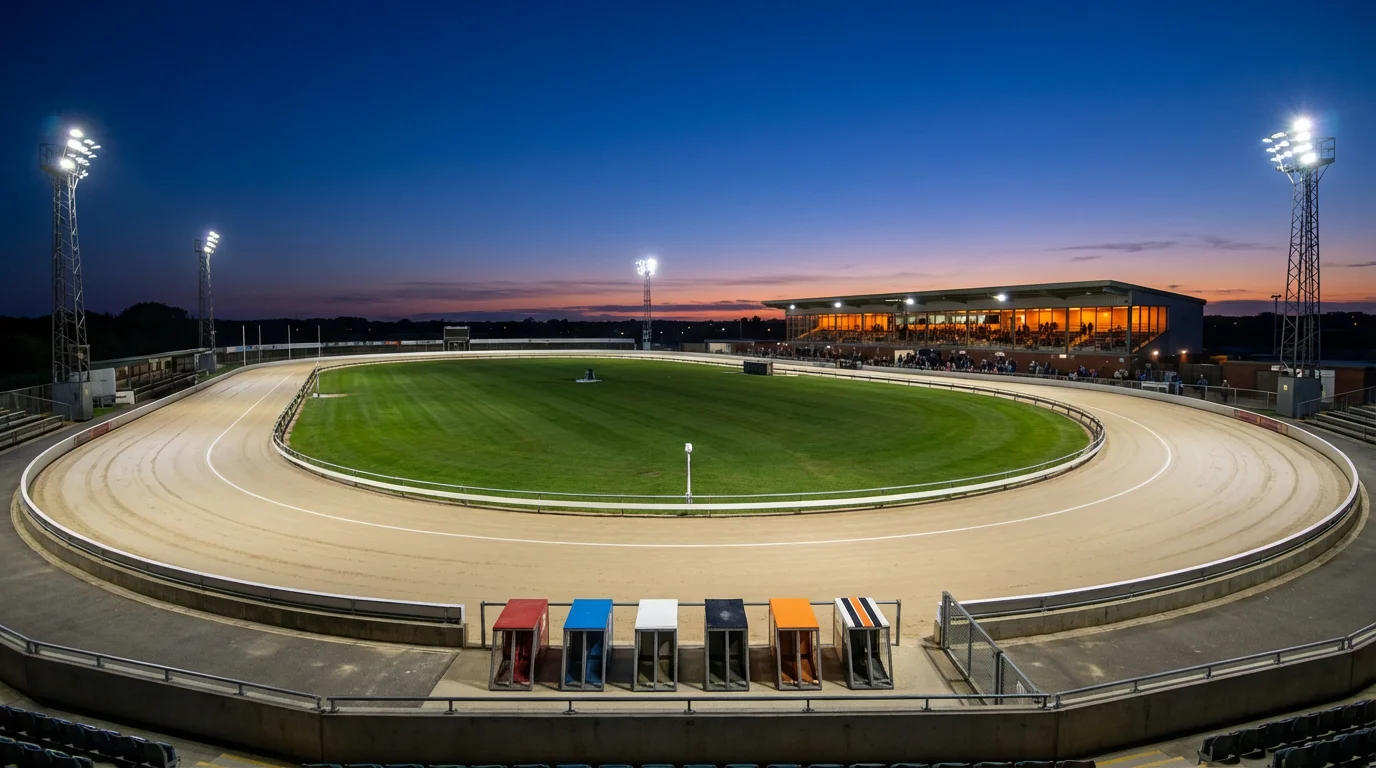
Eighteen licensed stadiums, four days a week minimum, and every single one with its own quirks that affect your bets. UK greyhound racing is not a monolithic circuit where every venue feels the same. Tracks differ in circumference, bend tightness, run-up distance to the first turn, surface condition, and the quality of competition they attract. A dog that dominates at Romford may struggle at Towcester. A form line produced at Monmore Green does not translate directly to Hove. Knowing why — and knowing which adjustments to make — is a genuine betting advantage.
This is not a directory. There are plenty of places to find a list of UK greyhound tracks with addresses and opening times. What this guide offers is a bettor’s perspective: which tracks reward which running styles, where trap bias is strongest, which venues host the races that matter, and how the racing calendar shapes the quality of competition across the year. If you bet on greyhounds regularly, you will eventually gravitate toward tracks you understand well. This guide accelerates that process.
We will cover the major venues in enough detail to give you a working feel for each one, then zoom out to look at how race distances vary across the circuit, how the calendar is structured, and why Category One events carry weight that extends far beyond the prize money on offer.
How UK Greyhound Tracks Are Structured
Every UK track runs on sand, but that is about where the similarities end. All GBGB-licensed greyhound stadiums in Britain use a sand-based racing surface, maintained to specific standards and tested before each meeting for consistency. The Greyhound Board of Great Britain oversees licensing, welfare, and integrity across the circuit, and any track operating under GBGB rules must meet minimum requirements for surface quality, safety barriers, veterinary provision, and timing equipment. Independent tracks — often called flapper tracks — operate outside GBGB regulation, and their results carry no form value for licensed racing. For betting purposes, only GBGB-licensed meetings matter.
Track geometry is where the meaningful differences start. A greyhound track is an oval, but ovals come in different sizes. Circumference ranges from roughly 360 metres at the smallest tracks to over 500 metres at the largest. That variation affects everything: bend tightness, the length of the straights, the run-up distance from the traps to the first bend, and how much room dogs have to separate before they enter the first turn. Tight tracks with short run-ups amplify the importance of trap draw and early pace. Larger, more galloping tracks give mid-pack runners and closers a better chance because there is more real estate to make up ground.
Ownership and media rights shape the competitive landscape in ways that are not immediately visible on the racecard. The Arena Racing Company — ARC — owns the majority of licensed UK tracks, and ARC’s partnership with SIS (Satellite Information Services) and bookmaker groups determines which meetings are broadcast and wagered on most heavily. Tracks with SIS media deals run morning and afternoon cards that are streamed directly into betting shops and online platforms. The Entain media rights deal covers a separate set of meetings. As a bettor, the practical impact is that certain tracks produce higher betting volumes (and therefore tighter markets) because their races are more widely available for viewing and wagering. Smaller tracks with fewer broadcast slots tend to have thinner markets, which can mean wider overrounds but also more opportunity for the prepared punter.
Surface condition varies between venues and across seasons. Sand tracks are affected by rainfall, temperature, and the frequency of racing. A track that hosted twelve races on Friday night and another twelve on Saturday will have a different surface character from one that has been resting for three days. The going — measured in centiseconds of allowance — captures this on a night-by-night basis, but the underlying track tendency is a longer-term factor. Some tracks consistently run fast; others consistently run slow. Learning a track’s baseline helps you calibrate calculated times more accurately.
Major Track Profiles
Not every track needs the same approach. The profiles below focus on six of the most significant venues in UK greyhound racing, chosen for their competitive importance, their distinctive characteristics, and their frequency of appearance on the betting calendar. Each profile highlights what matters most to a bettor: track shape, distance range, key races, and any pronounced bias that the data reveals.
Romford
Small track. Fast times. Inside runners dominate. Romford is one of the tightest ovals on the UK circuit, with a 350-metre circumference and a short run-up to the first bend that gives inside-drawn railers a pronounced advantage. The standard distance is 400 metres over four bends, with a 225-metre sprint option. The tight bends mean wide runners consistently lose ground, and the data backs this up: trap 1 at Romford produces winners at a rate significantly above the national average. If you are betting at Romford and ignoring trap draw, you are ignoring the track’s defining characteristic.
Romford runs frequent evening and morning cards under the ARC banner, and its meetings attract strong fields from London and south-east kennels. The pace of racing is sharp, and the margins are tight — which makes the racecard abbreviations column particularly important. Crowding incidents are common at the first bend, and a dog with a clean run has a built-in advantage over one that encounters trouble. Check the remarks carefully at this venue.
Nottingham
A fair, galloping track that rewards stamina and tactical speed. Nottingham is a larger oval with longer straights and more gradual bends, which gives mid-pack runners and closers a genuine chance to make up ground. The standard distance is 500 metres, with sprint races over 305 metres and staying events beyond that. Nottingham has hosted the English Greyhound Derby (in 2019 and 2020), cementing its status as one of the UK’s premier venues.
The track’s generous geometry means trap draw is less decisive here than at tighter tracks. Dogs drawn wide can still find room, and the longer run-up to the first bend allows the field to sort itself out before crowding becomes a problem. For bettors, Nottingham is a track where calculated time and class are more reliable indicators than trap position, which makes it a venue that rewards deeper form reading.
Hove
One of the south coast’s most competitive evening cards. Hove, part of the city of Brighton and Hove, runs regular evening meetings that attract strong fields from kennels across Sussex and the wider south-east. The standard distance is 515 metres, with a sprint option and occasional stayers’ races. The track is moderately sized with bends that are neither excessively tight nor wide open, making it a balanced venue where no single running style dominates.
Hove’s evening cards are well attended and well covered by media rights, which means the betting markets tend to be relatively efficient. That makes finding value harder than at smaller, less visible venues — but it also means the form is well documented and the racecard data is reliable. For punters developing their track-specific knowledge, Hove offers a representative middle ground: not as biased as Romford, not as expansive as Towcester, and not as heavily contested as Nottingham’s showcase meetings.
Monmore Green
Wolverhampton’s oval favours dogs with tactical speed — the ability to break well and then sustain pressure through the bends rather than relying on a single burst of early pace. Monmore Green is a mid-sized track that races over 480 metres as its standard trip, with a 264-metre sprint and a 630-metre staying distance. The bends are tighter than Nottingham but less severe than Romford, which places it in that middle territory where both railers and tactical runners can compete.
Monmore is a significant venue in the Midlands greyhound scene, hosting competitive graded meetings and occasional open races. Its morning and evening cards are well represented in the SIS broadcast schedule, giving bettors consistent access. The trap bias is moderate — inside traps have a slight edge, as they do at most UK tracks, but the margin is not as pronounced as at smaller ovals. It is a solid track for punters who rely on calculated time and pace analysis over raw trap statistics.
Central Park, Sittingbourne
The Kent track with Category One pedigree and a recent renovation that reshaped its racing surface. Central Park Stadium in Sittingbourne underwent a significant refurbishment in 2023, costing approximately half a million pounds and altering the track’s distances and surface characteristics. The standard race distance is 480 metres, with a 285-metre sprint and a 700-metre stayers’ trip. The renovation introduced new bend profiles and a refreshed sand surface, which means historical form data from before 2023 has limited relevance to current conditions.
Central Park operates under ARC ownership and runs a busy schedule: four SIS morning cards plus a Friday evening meeting, totalling five meetings per week. That volume makes it one of the most active tracks in the south-east and gives regular punters a deep pool of recent form data to work with. The track has hosted Category One events including the Grand National hurdles and the Springbok, and when Wimbledon Stadium closed in 2017, Central Park inherited several prestigious competitions. The Entain media deal ensures its evening meetings are widely broadcast.
For bettors, Central Park rewards track familiarity. The renovated bends have their own characteristics — tighter than some south-east ovals, which gives inside-drawn runners a moderate edge. Dogs with strong course form at Sittingbourne are worth following closely, because the track’s specific geometry is not replicated exactly at any other venue. If you plan to bet regularly on Central Park meetings, invest the time to learn how the post-renovation surface plays across different going conditions. The data is abundant; five meetings a week produces it fast.
Towcester
One of the largest tracks in the country, with distances to match. Towcester’s oval is among the most spacious on the UK circuit, and its race programme reflects that scale. Standard races are run over 480 metres, but the track is best known for its longer-distance events: 500-metre and 680-metre trips that test stamina as much as speed. Marathon distances beyond 800 metres occasionally feature in special events.
The generous circumference and wide bends make Towcester a track where mid-pack runners and closers have a genuine route to victory. The run-up to the first bend is long enough to reduce crowding risk, and the straights provide ample opportunity for strong stayers to reel in early leaders. Trap draw matters less here than at almost any other UK track, which means calculated time and distance suitability are the dominant form factors. If you are looking for a venue where class tells and the best dog tends to win regardless of starting position, Towcester is it.
Race Distances Across UK Tracks
Distances range from 238 metres at sprint tracks to over 1000 metres for marathon specialists. The range is far broader than most newcomers realise, and it has significant implications for form assessment and betting.
UK greyhound racing divides distances into three broad categories. Sprint races cover two bends, typically in the range of 238 to 285 metres depending on track circumference. These are explosive, high-speed contests where trapping and early pace determine the outcome almost entirely. There is very little time for a slow starter to recover, and the margins between first and sixth can be less than two seconds. Standard races cover four bends, usually between 450 and 500 metres, and represent the bread and butter of the sport. Most graded meetings are built around this distance, and the majority of form data in the racecard system relates to four-bend races. Staying races — six bends and beyond, from roughly 630 metres upward — test endurance and tactical intelligence. Dogs that lead sprints often cannot sustain their speed over six bends, and stayers tend to race more patiently, picking their way through the field over a longer journey.
The critical point for bettors is that distance preference is not transferable. A dog’s calculated time over 480 metres tells you nothing about its ability over 285. The physical demands are different, the racing dynamics are different, and the running style required is different. When a dog switches distance — from sprint to standard or from standard to staying — its prior form is essentially void for that specific variable. You need to look at whether it has any form at the new distance from earlier in its career, or treat it as an unknown quantity.
Within the same distance category, track-specific variations still matter. A 480-metre race at a tight track like Romford is run differently from a 480-metre race at a galloping track like Nottingham. The number of strides on the bends, the speed through the turns, and the energy cost of navigating tight versus wide curves all differ. Dogs that handle tight bends efficiently have an advantage at smaller tracks; dogs with a long, flowing stride perform better on bigger ovals. These are subtle distinctions, but over hundreds of bets they compound into a meaningful edge for the punter who has taken the time to understand them.
A practical approach is to pay close attention to the distance column in the racecard when a dog races at a track for the first time. If it has run the same distance at another venue, the calculated times may transfer — but account for the difference in track geometry. If the distance is entirely new, the form line is a question mark. Treat new-distance entries with appropriate caution and weight the rest of the card more heavily.
The UK Greyhound Racing Calendar
The greyhound calendar does not have an off-season — but it does have a rhythm. Licensed greyhound racing takes place year-round in the UK, with meetings held every day of the week at venues across the country. A typical week on the GBGB circuit produces over a hundred individual meetings, generating thousands of races and an enormous volume of form data. For a bettor, the sheer quantity is both an advantage and a hazard: opportunity is constant, but so is the temptation to overextend.
The rhythm of the calendar is shaped by the major events. The English Greyhound Derby, the single most prestigious race in the sport, is typically held in the summer at whichever track holds the current hosting rights. It is an open-race event, meaning entry is not grade-restricted, and the best dogs in the country compete across multiple rounds leading to a televised final. The build-up attracts ante-post betting markets weeks in advance, and the quality of the heats produces some of the best form data of the entire year.
Beyond the Derby, the annual calendar features a sequence of Category One events — the highest tier of competition, roughly equivalent to Group 1 in horse racing — spread across the year. The St Leger, traditionally a staying event, tests dogs over longer distances. The Greyhound Oaks targets bitches. The Select Stakes, the Cesarewitch, and the Champion Stakes each carry Category One status and attract top-class fields. These events are the anchors of the racing year, and they influence the broader calendar: trainers plan their dogs’ campaigns around them, which affects the quality of fields in the weeks leading up to and following each major.
Seasonal patterns in field quality are subtle but real. The weeks immediately before a major event tend to see slightly weaker graded cards at non-hosting tracks, as top trainers rest their best dogs in preparation. Conversely, the weeks after a major — particularly when eliminated dogs return to graded racing — can produce unusually strong fields at ordinary meetings, which means the standard of competition temporarily exceeds what the grade classification would suggest. Savvy bettors track these patterns because they affect the reliability of recent form. A dog that won an A3 race the week after the Derby, when the field was stacked with returning open-race runners, achieved something different from a dog that won an A3 race in a quiet mid-winter week.
Morning, afternoon, and evening meetings operate on a fixed broadcast schedule tied to media rights agreements. SIS morning cards start early and provide the bulk of daytime racing content for betting shops. Evening meetings, often the most well-attended and highest-quality events of the week, are broadcast under separate agreements and tend to attract stronger fields. For bettors who are selective about which meetings to target, the evening cards at major tracks generally offer the best combination of competitive fields, reliable form data, and efficient markets.
Category One Events
Category One is the top tier — roughly fifty-five events a year, contested by the best dogs in the country (the full schedule is published annually by the GBGB open race planning committee). These races carry the highest prize money, attract the deepest fields, and generate the most intense betting markets in the sport. They are the greyhound equivalent of Group 1 flat races in horse racing, and they carry comparable prestige within the sport’s community.
While the Derby dominates the summer headlines, the calendar distributes Category One events throughout the year. The Champion Stakes tests the best sprinters. The Cesarewitch rewards staying power. Regional derbies in Scotland and Ireland broaden the competitive base. Each event draws its own ante-post market, its own qualifying structure, and its own cadre of dedicated followers. For a form student, these events are the best classroom in the sport: deep fields, well-documented runners, and form data that rewards genuine analysis.
From a betting perspective, Category One races present a paradox. The fields are stronger, which makes prediction harder. But the form data is richer, because the dogs involved have longer track records and more documented performances at a high level. The markets are also more efficient — more money, more analysis, fewer soft spots in the pricing. Finding value at Category One level demands a higher standard of form reading than a Tuesday morning A4 at a small track. But the rewards, both financial and intellectual, are proportionally greater for the punter who rises to the challenge.
Choosing Tracks Like a Bettor, Not a Spectator
Some tracks are easier to read than others. That is a betting edge, not a tourist preference. The single most practical thing you can do to improve your greyhound betting results is to specialise. Pick one or two tracks, follow them week after week, and build a mental model of how racing works at that specific venue. You will learn which traps produce winners, which trainers target particular meetings, how the going tends to play across seasons, and which grades produce the most predictable results.
Generalising across the entire UK circuit is tempting because it gives you more races to bet on. But it also dilutes your analytical advantage. A punter who knows Romford inside out — who can recite the trap statistics, who has watched the same trainers’ dogs run dozens of times, who can sense when the going is playing differently from the number on the card — has a real edge at that venue. A punter who bets on whichever track happens to be racing at the moment they open their app has no edge at all. They are a tourist, dipping into unfamiliar territory with every meeting.
The UK greyhound circuit is large enough to support multiple specialisations. Morning punters might focus on the SIS-broadcast cards at two or three tracks. Evening-only bettors might concentrate on a single venue’s Friday or Saturday meeting. The key is consistency: choose your tracks, learn their quirks, and let the accumulated knowledge compound into something the market cannot easily replicate. Track familiarity is not glamorous. It is not a system. It is not a shortcut. It is the foundation that every other piece of analysis sits on.
Find more track guides at centralparkdogresult.
Also read our Central Park Sittingbourne guide.
