
Live Greyhound Racing Streaming: Where and How to Watch
 Available in US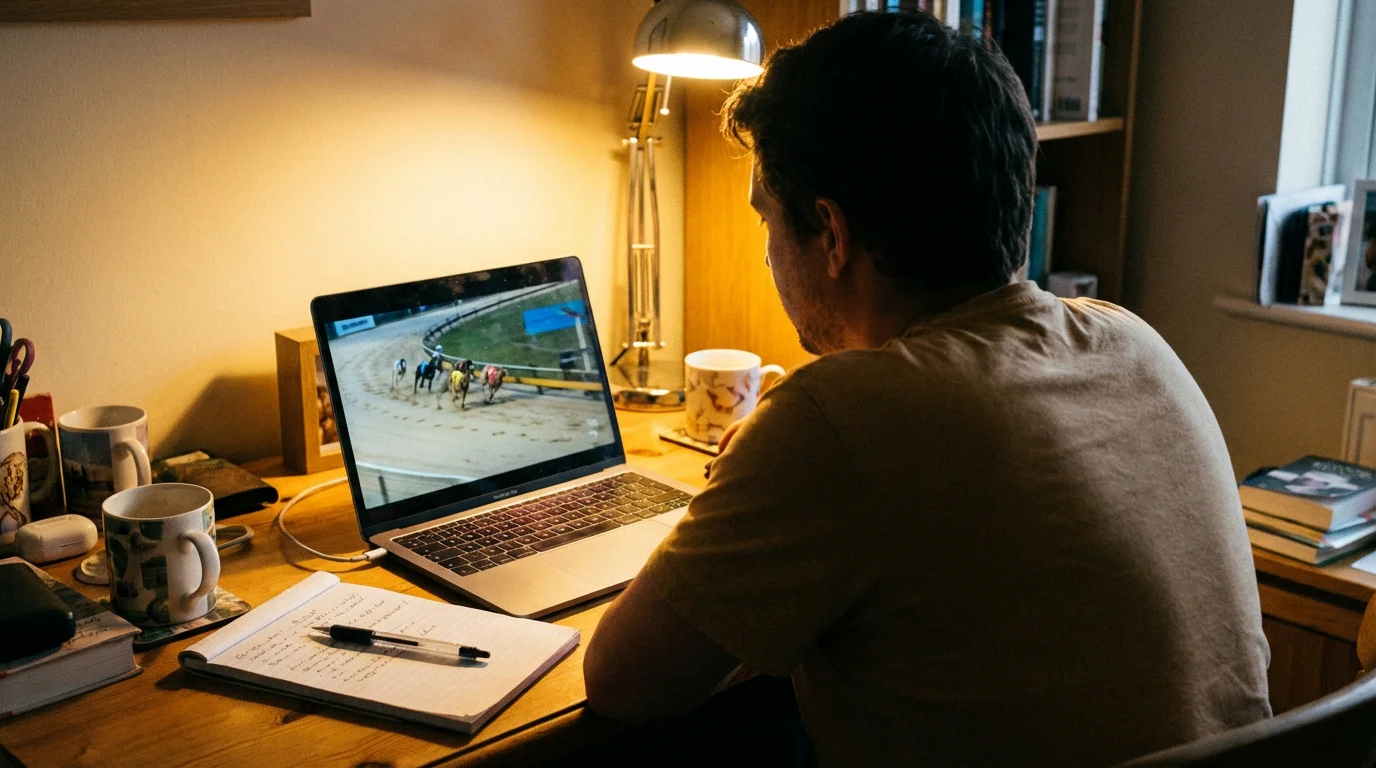
You don’t need to be at the track to watch greyhound racing. You don’t even need to be in the same country. Live streaming has transformed how the sport is consumed, moving it from a stadium experience to a screen experience for the majority of its betting audience. Most major UK bookmakers now offer live video of greyhound meetings as part of their platform, and the infrastructure behind those streams — satellite feeds, broadcast deals, and media partnerships — makes British greyhound racing available to anyone with a funded betting account and an internet connection.
For bettors, streaming is more than entertainment. Watching a race live gives you information that no racecard can provide: how a dog moves, how it handles the bends, whether it looks fit and sharp or sluggish in the parade. This article covers where to find live greyhound streams, what the qualifying requirements are, how the broadcast infrastructure works, and why watching the race — rather than just reading the result — changes the way you bet.
Which Bookmakers Offer Live Streaming
Most of the major licensed UK bookmakers stream live greyhound racing through their websites and mobile apps. The coverage extends across GBGB-licensed meetings, including both evening and morning cards, and typically covers the full schedule of races broadcast via SIS (Satellite Information Services). The specifics — which meetings are available, how many races per day, and the quality of the stream — vary between operators, but the general availability is broad.
Bookmakers don’t produce the streams themselves. They license the broadcast feed from SIS or other providers and embed it in their betting platforms. This means the video quality and commentary are consistent across different bookmakers, because they’re all sourcing the same underlying feed. What differs is the platform interface: how the stream is positioned relative to the betting market, whether live data overlays are included, and how smoothly the video runs on mobile versus desktop.
Some bookmakers also offer streams through dedicated racing channels or apps. RPGTV (Racing Post Greyhound TV) has historically provided an alternative viewing option with its own commentary and analysis, though availability varies. For the mainstream bettor, the bookmaker’s own platform is the most accessible route to live greyhound coverage, and it has the advantage of placing the video directly alongside the betting market — which means you can watch the parade, assess the dogs, and place your bet without switching between applications.
It’s worth checking your bookmaker’s streaming schedule before assuming a particular meeting will be available. While the majority of SIS-broadcast meetings are covered, there are occasional gaps — especially for meetings at smaller tracks or at unusual times. The bookmaker’s racing section typically lists which meetings have live video, often indicated by a camera icon or a “Watch Live” label next to the meeting name.
Qualifying Bet Requirements
Access to live streaming is rarely unconditional. Most bookmakers require you to have either a funded account or a placed bet on the meeting you want to watch. The specifics vary. Some require a minimum balance — often just one pound — while others require a qualifying bet on any race at the meeting. A few offer streaming with no conditions beyond having a registered and verified account.
The qualifying bet approach is the most common. Typically, you need to place a bet of at least one pound on a race at the meeting before the stream unlocks. This is a minimal cost for the value it provides, and many bettors build the qualifying bet into their normal activity — if you’re planning to bet on the meeting anyway, the stream effectively costs nothing extra. If you’re watching purely for research purposes rather than betting on that particular card, the qualifying bet is a small price for the data you’ll gather from watching the dogs in motion.
These requirements exist because the bookmakers pay licensing fees for the broadcast rights, and the qualifying bet mechanism ensures that the streams are generating associated betting revenue. It’s a business model that works for all parties: the bookmakers get viewers who are also bettors, the broadcast providers get distribution, and the tracks get exposure beyond their local audience. For the bettor, it means live greyhound racing is essentially free to watch, provided you’re active on the platform.
SIS and RPGTV: The Broadcast Infrastructure
The backbone of live greyhound racing in the UK is SIS — Sports Information Services (sis.tv). SIS provides the live pictures, commentary, and data feeds that power the majority of greyhound streams seen on bookmaker platforms and in licensed betting shops. When you watch a greyhound race on your phone through a betting app, the feed is almost certainly coming from SIS.
SIS broadcasts from GBGB-licensed tracks under media rights agreements with the track operators, many of which are owned by Arena Racing Company (ARC). These agreements determine which meetings are broadcast, at what times, and to which platforms. The morning cards that appear on weekday schedules — the SIS morning meetings that tracks like Central Park, Romford, and others run specifically for the broadcast market — exist because of these deals. They’re produced for the screen as much as for the stands.
RPGTV operates as a more editorially-driven service, offering pre-race analysis, form discussion, and interviews alongside live race coverage. Its commentary tends to be more detailed than the standard SIS feed, which makes it valuable for bettors who want context and opinion alongside the visuals. Availability of RPGTV content varies by platform, and its scheduling doesn’t always cover the same meetings as SIS.
The practical takeaway for bettors is that the broadcast infrastructure is mature and reliable. UK greyhound racing has invested heavily in making its product available remotely, and the result is a system where virtually every significant meeting can be watched live from anywhere. That accessibility is one of the reasons greyhound betting has maintained its volume even as stadium attendance has declined — the audience migrated from the stands to the screens, but it didn’t disappear.
Streaming on Mobile vs Desktop
Most bookmaker apps support live greyhound streaming on both mobile and desktop, but the experience differs. Desktop typically offers a larger video window, easier multitasking between streams and form data, and a more stable connection. Mobile offers portability — you can watch a race from anywhere — but the smaller screen compresses the visual detail, and mobile data connections can introduce buffering that makes live viewing unreliable at critical moments.
For bettors who use streaming as an analytical tool rather than just entertainment, desktop is generally the better option. The ability to have the stream running alongside a racecard, results database, or form guide on the same screen means you can cross-reference what you’re seeing with what the data says. Watching a dog’s parade movement while checking its recent weight data, or observing its trap exit speed while reviewing its split time history, is a workflow that benefits from screen space.
Mobile streaming works well for casual monitoring — keeping an eye on a meeting you’re not betting heavily on, watching a specific race you’ve already analysed, or following the results of dogs you’re tracking for future assessment. The key limitation is that mobile streams are more susceptible to buffering delays, which means you might see the result a second or two after it happens. In a sport where races last thirty seconds and markets close fast, that delay can be annoying but is rarely a practical problem for pre-race bettors who aren’t trying to trade in-play.
Watching the Race Changes the Bet
The racecard tells you what happened in a dog’s previous runs. The stream shows you how it happened. That distinction sounds academic, but it affects real decisions. A dog that “led to the third bend and faded” could have faded because it was unfit, because it was bumped off its stride by an adjacent runner, or because the pace was unsustainably fast and it simply ran out of fuel. The race remarks compress those scenarios into the same abbreviation. The video shows you which one actually occurred.
Watching replays and live races builds a visual memory that supplements the numerical form data. You start recognising how specific dogs move — which ones have smooth, efficient actions and which ones look laboured. You notice which dogs are alert in the parade and which look disinterested. You see the first-bend crowding in real time and understand why the Crd1 notation on the card doesn’t always tell the full story. These observations aren’t quantifiable in the same way split times and calculated times are, but they add a qualitative layer to your analysis that pure data reading can’t replicate.
The bettors who consistently outperform the market are usually the ones who combine both approaches: the numbers from the racecard and the visuals from the stream. Neither is sufficient on its own. The racecard without the video is analysis without context. The video without the racecard is watching without structure. Together, they give you the most complete picture of a dog’s ability, condition, and racing character that the sport makes available.
Stay updated at centralparkdogresult.
Also check our major UK greyhound races.
