
Tote Pool Betting on Greyhounds: How the Pools Work
 Available in US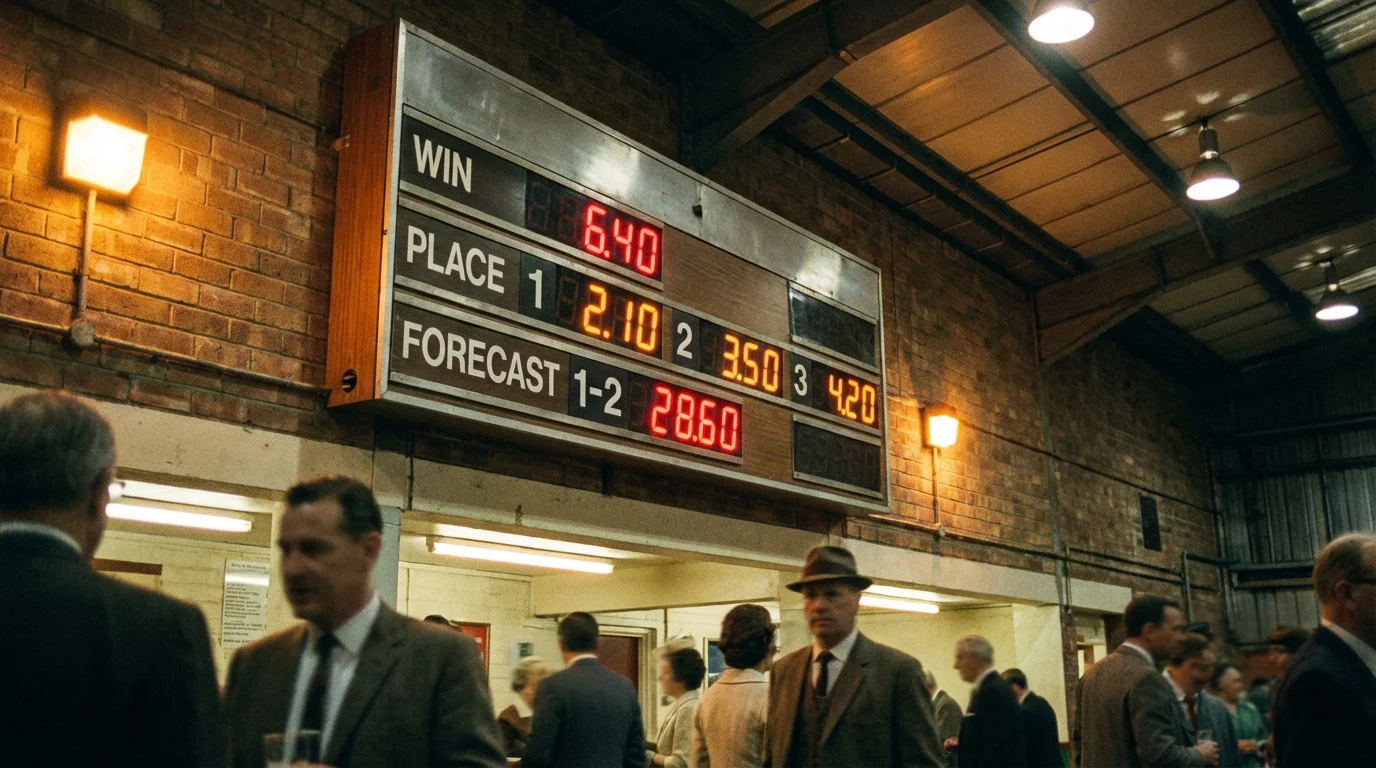
With fixed odds, you know your price the moment you place the bet. With the tote, you wait. Your return depends on how much money goes into the pool, how it’s distributed across the selections, and what’s left after the operator takes its cut. That uncertainty makes tote pool betting a fundamentally different proposition from fixed-odds betting, and one that most greyhound bettors either misunderstand or ignore entirely.
Tote pools have been part of greyhound racing since the sport’s earliest days in Britain. They’re the original form of organised on-course betting — money in, dividends out, with the track acting as the intermediary rather than a bookmaker setting prices. At many stadiums, the tote is still the primary betting mechanism for racegoers, and its pools feed the forecast and tricast dividends that appear in official results (GBGB Rules of Racing). Understanding how the pools work isn’t just useful for anyone betting at the track. It’s essential for anyone trying to interpret the forecast and tricast payouts that shape the wider market.
How Tote Pools Are Structured
A tote pool is a parimutuel system. All the money wagered on a particular bet type in a particular race goes into a single pool. The operator deducts a fixed percentage — the takeout — and the remainder is divided among the winning tickets. The more people who backed the winner, the smaller each share. The fewer people who backed it, the larger the payout per ticket.
This is structurally different from betting with a bookmaker. When you place a fixed-odds bet, the bookmaker is your counterparty. The price you accept is the price you get, and the bookmaker carries the risk. In a tote pool, you’re effectively betting against the other punters in the pool. The operator doesn’t care who wins — it takes the same percentage regardless. Your return is determined by the collective betting behaviour of everyone else who wagered on that race, in that pool, on that day.
The takeout percentage varies by pool type and operator, but it typically ranges from around 25 to 34 percent of the total pool (Britbet greyhound pool rules). That’s a significant deduction, and it’s worth knowing because it directly affects the value of tote betting compared to fixed odds. A 30 percent takeout means that for every hundred pounds wagered across all selections, only seventy pounds are returned to bettors in total. The remaining thirty goes to the operator. Over time, that margin works against the bettor just as the overround works against you in fixed-odds markets — but the effect can be more or less punishing depending on the size and composition of the pool.
Pool sizes at greyhound meetings vary enormously. A well-attended Saturday evening card at a major track will generate substantially larger pools than a Tuesday morning SIS card at a smaller venue. Larger pools tend to produce more stable, predictable dividends because the money is spread more evenly across selections. Smaller pools are more volatile — a single large bet on one dog can dramatically shift the dividend for every other selection, creating both risks and opportunities for bettors who understand the dynamics.
Win Pool and Place Pool
The win pool is the simplest tote bet. All money staked on “which dog wins” goes into a single pot. After the takeout is deducted, the remainder is divided among everyone who backed the winning dog. The dividend is declared as a return per unit stake — for example, a win pool dividend of 4.60 means you receive four pounds and sixty pence for every pound you staked, including your stake back. A ten-pound bet returns forty-six pounds.
The place pool works on the same principle but covers the top two finishers. Punters back a dog to finish first or second, and the pool is split between the two place positions after the takeout. The dividend for each placed dog is declared separately, and it’s almost always lower than the win pool dividend for the same dog — which makes sense, because more outcomes qualify for a payout and the pool is split more ways.
One important distinction: tote win and place dividends are not known in advance. Unlike fixed odds, where the price is locked in at the time of the bet, tote dividends fluctuate right up until the pool closes (which happens when the race starts). Late money coming into the pool changes the dividend for every selection. A dog that looks like it will pay a generous tote dividend can see its return shrink if a wave of late money backs it, diluting the payout among more tickets.
For bettors at the track, this creates a timing consideration. Betting early into a thin pool carries uncertainty about the final dividend. Betting late gives you a better sense of the likely payout but less time to react. Online tote betting often shows indicative dividends — estimates based on the current pool composition — which helps, though these can shift significantly in the final moments before the off.
Forecast and Tricast Pools
Forecast and tricast pools operate on the same parimutuel principle but with more possible outcomes and, consequently, more volatile dividends. The forecast pool covers every possible first-and-second combination. In a six-runner race, that’s thirty permutations. The tricast pool covers every first-second-third combination — one hundred and twenty permutations. The money is spread across all of those possibilities, and the dividend for any specific combination depends on how much was staked on it relative to the total pool.
Because the number of possible outcomes is much larger, forecast and tricast pools tend to have less money per permutation than win or place pools. Many combinations receive little or no money, which means that when an uncommon result occurs — two outsiders finishing first and second, or an unexpected tricast order — the dividend can be disproportionately large. This is the mechanism behind the eye-catching tricast payouts that occasionally appear in results: a thin pool, an unusual result, and a handful of winning tickets sharing the entire pot.
Computer forecast and tricast calculations, used by many bookmakers and results services, are derived from the individual win odds rather than from actual pool money. They serve as a standardised way to declare dividends when a traditional tote pool isn’t available or is too small to produce meaningful payouts. The computer calculation typically produces dividends that are close to what a well-balanced tote pool would return, but they can diverge significantly when the win odds are at unusual levels or the result is particularly unexpected.
For bettors, the key insight is that forecast and tricast dividends are not predictable at the point of placing the bet. You can estimate the likely range based on the dogs’ individual prices, but the actual declared dividend is only confirmed after the race. This uncertainty is inherent to pool betting and is one of the reasons why some bettors prefer the certainty of fixed-odds win and each-way bets over the variable returns of tote-based forecast and tricast markets.
Tote vs Fixed Odds: When Each Wins
Fixed odds and tote pools each have structural advantages, and the smart approach is knowing when to use which. They’re not interchangeable. They’re different tools built on different mechanics, and the right choice depends on the race, the selection, and the market conditions.
Fixed odds win when you want price certainty. If you’ve identified value at a specific price and want to lock it in, fixed odds give you that guarantee. The price you take is the price you’re paid. In races where the market is well-traded and the prices are competitive, fixed odds also tend to offer better value than tote win pools, because the bookmaker’s overround is often lower than the tote’s takeout percentage. For straightforward win and place betting, fixed odds are usually the sharper option.
The tote wins in situations where the pool is thin and the result is unusual. Outsider wins in small pools can produce tote dividends that exceed any fixed-odds price available before the race. This is most common at smaller meetings, morning cards, and tracks where the on-course betting population is small. A tote pool with limited money and a surprise result can pay multiples of what the equivalent fixed-odds bet would have returned. The catch is that you can’t predict those situations in advance — you’re effectively accepting the uncertainty of the pool in exchange for the possibility of an inflated payout.
For forecast and tricast bets, the tote is often the only option at the track, and computer calculations are the standard for off-course betting. In these markets, the tote-versus-fixed debate doesn’t apply in the same way, because there is no fixed-odds equivalent. The dividend is what it is. Your edge, if you have one, comes from selecting combinations that the rest of the pool hasn’t covered — not from finding a better price elsewhere.
The Pool Reflects the Crowd — For Better or Worse
Every tote dividend is a snapshot of collective opinion at the moment the race starts. The pool captures what the betting public thought about each dog, each combination, each finishing order — expressed not in expert analysis but in actual money staked. When the crowd gets it right, the dividends are modest. When the crowd gets it wrong, the dividends balloon. That’s the fundamental dynamic of pool betting, and it hasn’t changed since the first tote machines were installed at British greyhound tracks nearly a century ago.
For bettors, tote pools are worth understanding even if you never place a pool bet yourself. The forecast and tricast dividends that appear in race results are tote-derived figures. The dynamics that produce them — pool size, combination popularity, takeout deductions — all affect the returns you see. Knowing how those numbers are generated helps you evaluate whether a particular bet type is worth pursuing at a particular meeting. A big tricast dividend at a well-attended evening card means something different from the same figure at a sparsely-traded morning meeting. Context matters in form analysis. It matters in pool betting too.
Find more bet type guides at centralparkdogresult.
Also see our greyhound bet types guide.
