Betting Guide
Central Park Greyhound Results & the Complete UK Dog Betting Guide
Race results, racecard analysis and a disciplined approach to greyhound betting.
Best Greyhound Betting Sites – Bet on Greyhounds in 2026
Loading...
Contents
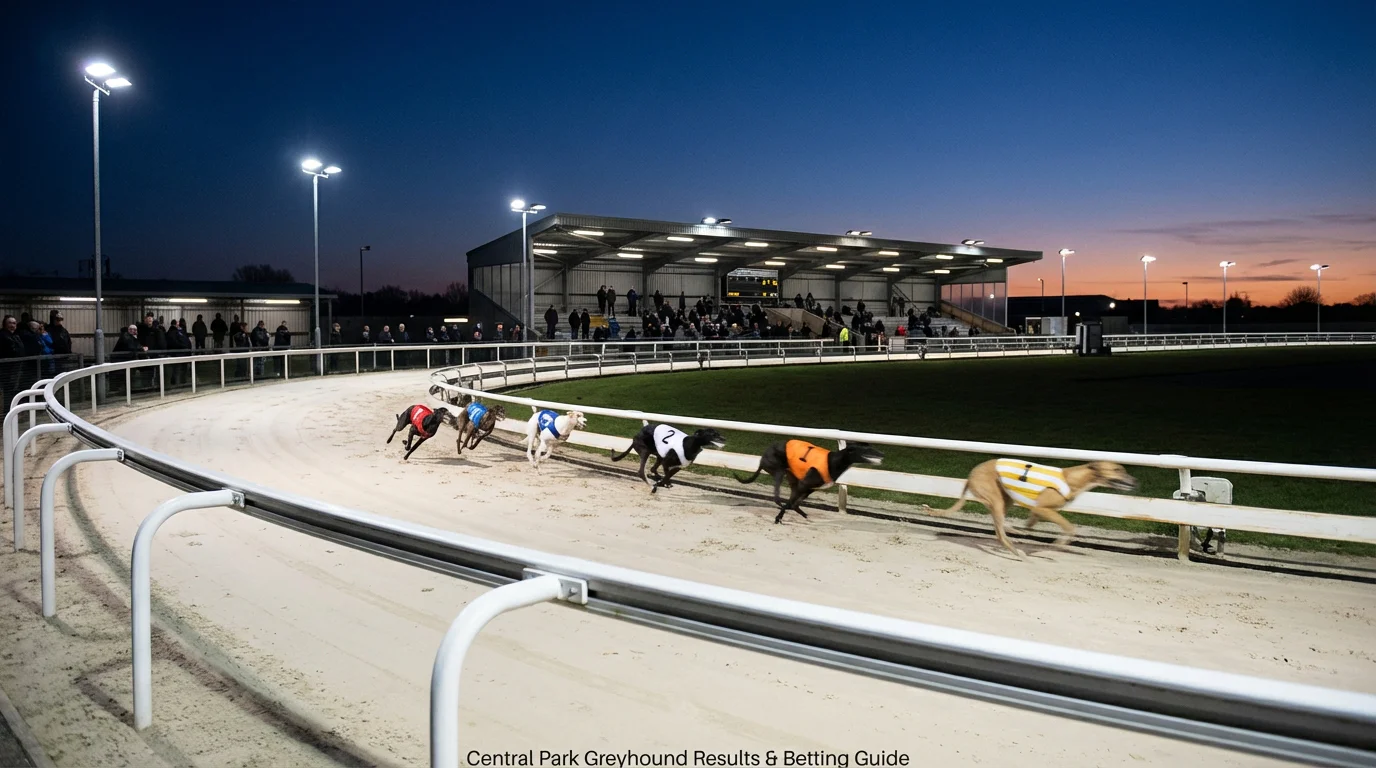
Start ReadingCentral Park Stadium in Sittingbourne runs races five days a week — and every one of them is a betting market. Situated off Church Road in Kent, the track hosts SIS cards on Mondays, Tuesdays, Thursdays and Friday mornings, plus Saturday evening racing that regularly pulls Category One-level competition. If you have followed greyhound results from anywhere in south-east England over the past decade, chances are Central Park has featured on your screen more often than you realise.
This page exists because most greyhound results sites do precisely one thing: they list finishing positions, times and prices. That is useful in the way a phone book is useful — the data is there, but it tells you nothing about how to use it. What separates a casual glance at results from a genuine betting edge is the ability to read those numbers, decode the racecard, and apply the whole lot to a disciplined strategy.
Greyhound betting differs from horse racing in ways that matter to your bankroll. Six runners instead of a sprawling field. Thirty seconds of action instead of three minutes. No jockey decisions, no tactical riding. The variables are fewer but sharper: trap draw, early pace, distance preference, going conditions. That compression is what makes the sport attractive to analytical bettors — less noise to filter and more data per race than almost any other form of racing.
What follows covers the full arc: how Central Park's races work, what greyhound results actually mean, how to read a racecard like a professional, every major bet type from win singles through to combination tricasts, how odds are formed, how form analysis translates into selections, and what strategic frameworks keep you solvent over time. Whether you are new to the sport or a regular who wants to sharpen an existing process, this is the reference page you will keep coming back to.
Central Park at a Glance
Central Park hosts five meetings per week across SIS daytime cards and Saturday evening racing. Each card typically features 12 races over distances from 277 metres to 946 metres. The track is owned by Arena Racing Company and covered by Entain's media rights deal, meaning its races are streamed live through major UK bookmakers. As of the 2026 centenary season, Central Park holds four Category One finals on its annual calendar.
What Central Park Results Actually Tell You
How Central Park Greyhound Racing Works
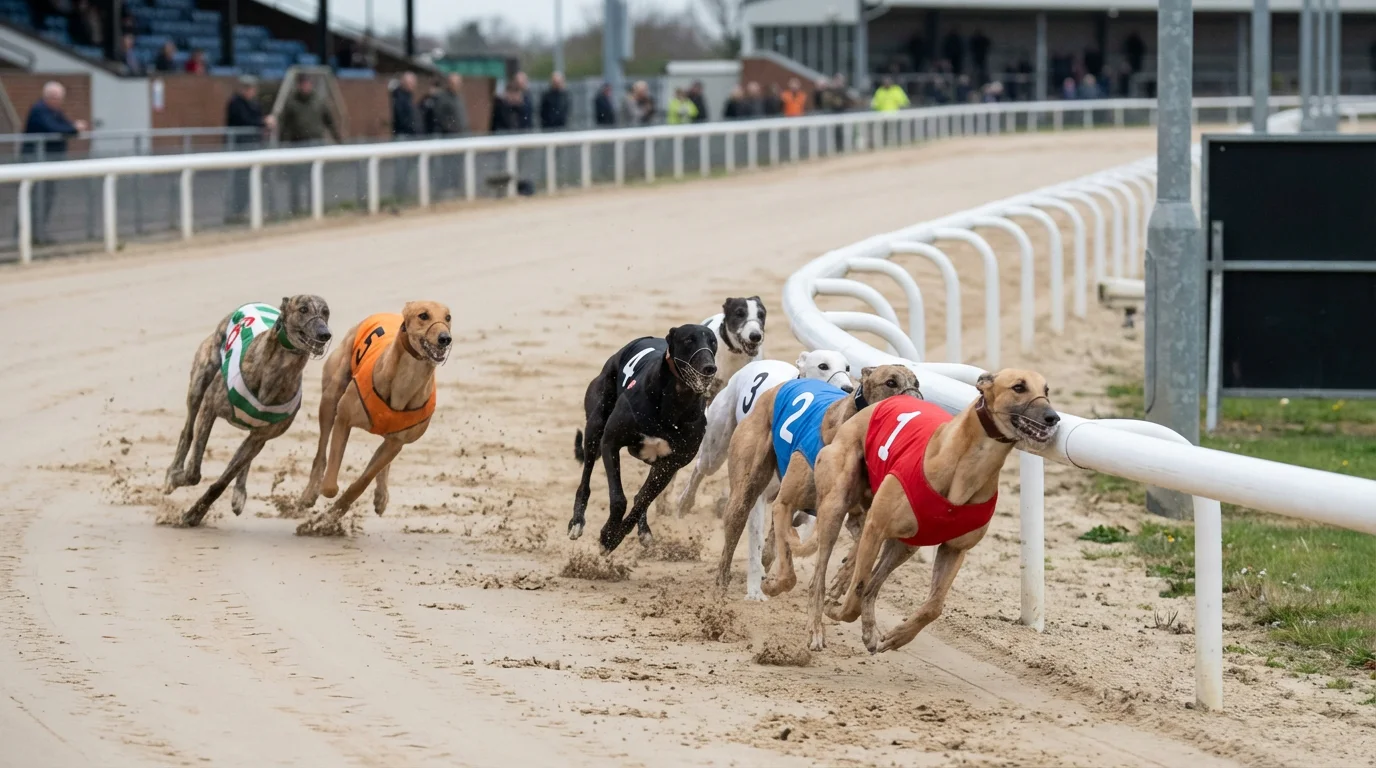
Six dogs, one mechanical hare, and roughly 30 seconds of racing. That is the skeleton of every greyhound race at Central Park and every other GBGB-licensed track. But the simplicity of the format disguises a sport with more moving parts than casual observers appreciate.
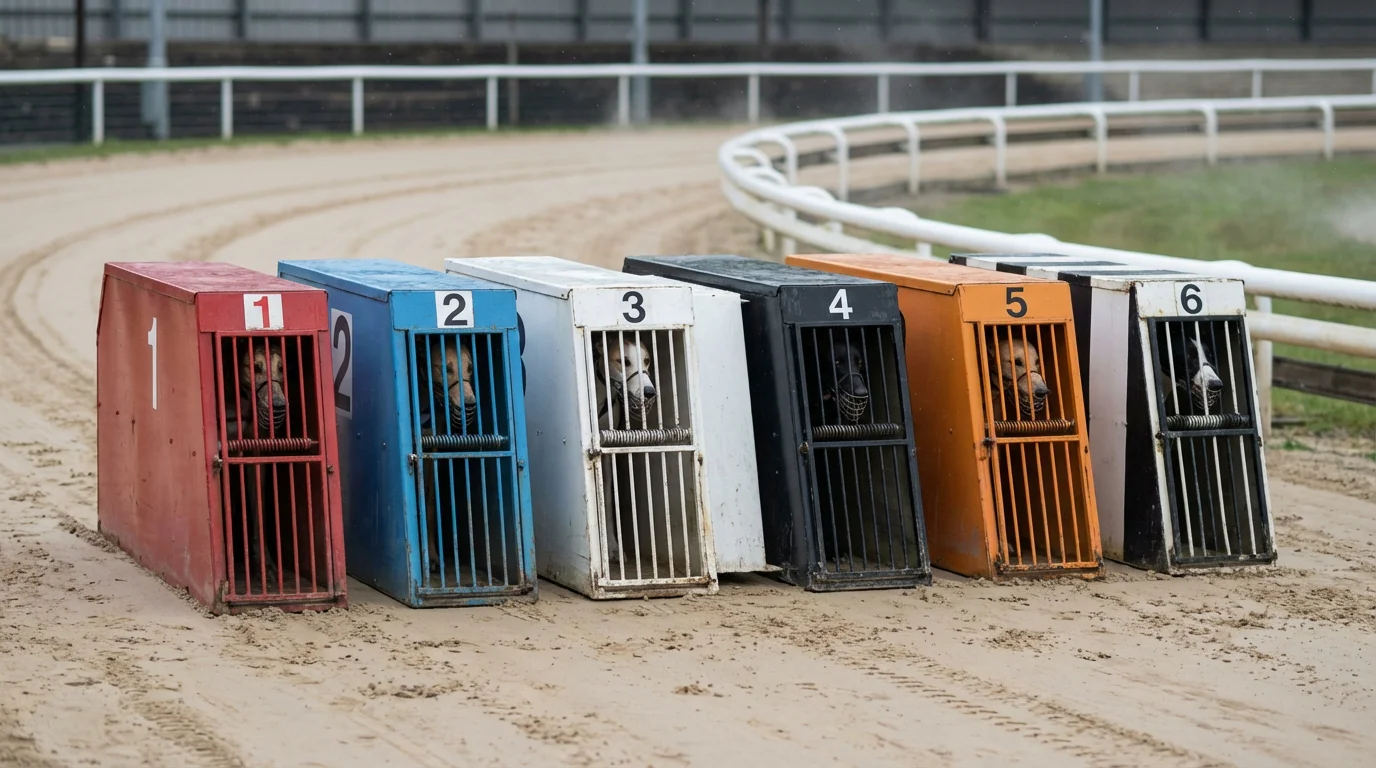
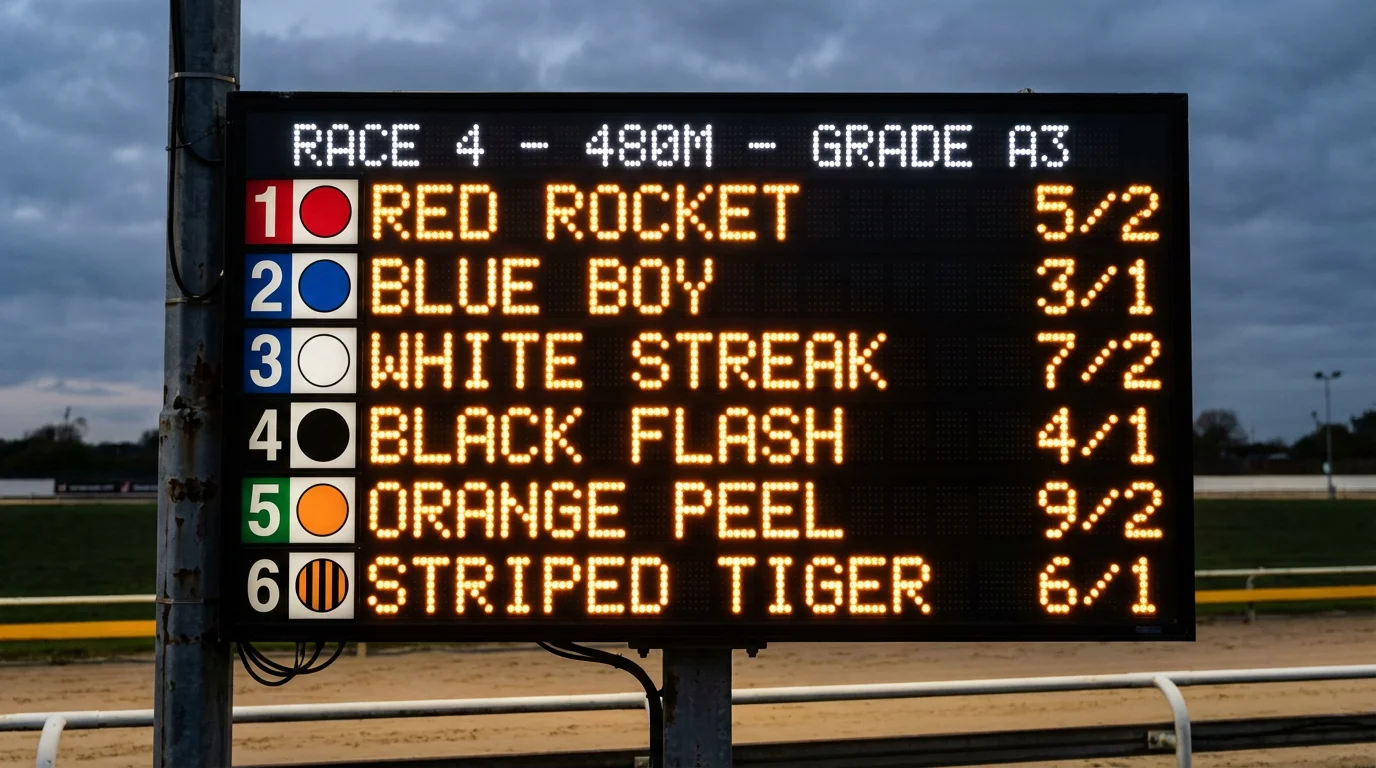
Each race starts with the dogs being paraded before being loaded into numbered starting traps. The traps are colour-coded — red for trap 1, blue for 2, white for 3, black for 4, orange for 5 and striped black-and-white for 6. These colours map directly to the trap draw analysis that drives serious form study. The mechanical hare accelerates around the outside rail, the traps spring open, and the field gives chase around a sand-surfaced oval track.
Central Park's racing programme sits within the broader structure of GBGB-regulated greyhound racing in England. The Greyhound Board of Great Britain oversees 18 licensed stadia, sets the Rules of Racing, and administers the grading system. Arena Racing Company owns Central Park and operates it as part of a media-and-betting ecosystem where SIS provides the broadcast feed and Entain holds the off-course media rights. The practical upshot: Central Park's races are available to watch and wager on through most major UK betting platforms.
A standard Central Park meeting card runs to 12 races. The grading system slots dogs into classes — A1 through to D4 for flat races, with separate open-race categories (OR1, OR2, OR3) for higher-quality fields. Dogs are graded by the racing manager based on recent performance: win comfortably and get promoted, struggle and get dropped. Understanding grade movement is fundamental to reading form, because a finishing time means nothing without knowing what grade the race was.
Morning cards at Central Park tend to feature graded races across the full range of distances, drawing dogs from local trainers and the broader Kent kennels. Saturday evenings carry a different atmosphere — bigger fields, open-race competitions, and the occasional Category One final that attracts the best greyhounds in Britain. The distinction matters for bettors: daytime cards are where regular wagering happens, while evening events demand a different approach because the class is higher and form lines cross-reference multiple tracks.
Sprint
277m
| Distance changes everything. A sprint specialist over 277 metres is a different animal to a stayer grinding out 664 metres, and the betting approach for each is fundamentally different. Central Park's post-renovation distance configuration gives bettors three distinct categories to work with. | The 277-metre sprint is a two-bend dash that favours early pace above all else. The run to the first bend is short, which means trap draw is critical — a fast breaker from trap 1 or 2 can be at the first bend and gone before the wide runners have found their stride. Sprint races at Central Park tend to produce shorter-priced favourites because the margin for error is tiny and early speed is the dominant variable. | The 491-metre standard distance is the bread and butter of most Central Park cards. Four bends, enough time for the race to develop, and enough distance for dogs with tactical speed to recover from minor trouble at the first turn. This is where form reading becomes most rewarding because the race is long enough for multiple variables — trap draw, pace, stamina, going preference — to influence the result. | The 664-metre stayers' trip is reserved for dogs with genuine stamina. These races reward different qualities: the ability to settle into a rhythm, conserve energy through the middle bends, and produce a sustained finish. The ARC Cesarewitch — Central Park's marquee stayers' event — is run over the extended 731-metre distance, and it consistently attracts the best staying greyhounds in Britain. Stayers' races also tend to produce bigger-priced winners, because sustained performance over six bends introduces more variability than a two-bend sprint. |
Now that you know what happens on the track — here is how to read what happened after.
| A finishing time without context is just a number. When you pull up a Central Park result and see that trap 4 won in 29.83 seconds, that figure tells you almost nothing about whether the dog ran well or whether you should back it next time. Reading greyhound results properly means understanding every piece of data the result page provides — and knowing which pieces matter for future betting decisions. |
A standard greyhound result shows finishing positions, trap numbers, dog names, the winner's time, distances between finishers, starting prices, and the forecast and tricast dividends. Consider a hypothetical Central Park 491-metre race. The winner, drawn in trap 4, finishes in 29.83 seconds. The runner-up is a neck behind. Third is three-quarters of a length further back. The SP of the winner is 5/2, the forecast pays 18.40, and the tricast returns 87.60. |
Finishing distances tell you how the race unfolded. A neck (nk) is the tightest margin. A head (hd) is slightly more. From there, distances are measured in lengths, with quarter-length increments. A dog beaten six lengths has been comprehensively defeated. A neck separating the first four indicates a bunched finish where the result could easily have gone differently — a clue to the competitiveness of the grade. |
The starting price — the SP — is the official odds at the moment the traps opened. It represents the market's collective assessment of each dog's chance. Comparing the SP to your own pre-race assessment is the foundation of value betting. |
Forecast and tricast dividends are the payouts for correctly predicting the first two or first three finishers in exact order. These are usually tote-pool returns. A high forecast dividend often signals an unexpected result, while a modest one suggests the market got the first two broadly right. |
SP (Starting Price) — the official odds at the moment the traps open, used as the settlement price when no fixed odds have been taken.
The Greyhound Racecard Decoded
The racecard is not decoration — it is your edge. Every piece of data you need to make an informed betting decision is packed into a single page, and the bettors who know how to read it have a structural advantage over those who glance at the trap numbers and pick a name they like.
The header of a greyhound racecard tells you the race time, distance, grade and prize money. These set the context. A 491-metre A3 race is a mid-grade contest where the dogs have been competitive at that level recently. A 277-metre D4 is a low-grade sprint for dogs working their way through the system. The grade determines the quality of opposition, which in turn determines how much weight you should give to the form figures.
Below the header, each of the six runners is listed with its trap number, name, colour and sex, sire and dam, trainer and owner. The dog's colour and sex abbreviations are standardised — d for dog (male), b for bitch (female), followed by a coat colour code like bk (black), bd (brindle), wbk (white and black). The trainer's name is more useful than beginners realise. Certain trainers have strong records at specific tracks, and knowing which kennels are in form provides insight that raw numbers do not capture.
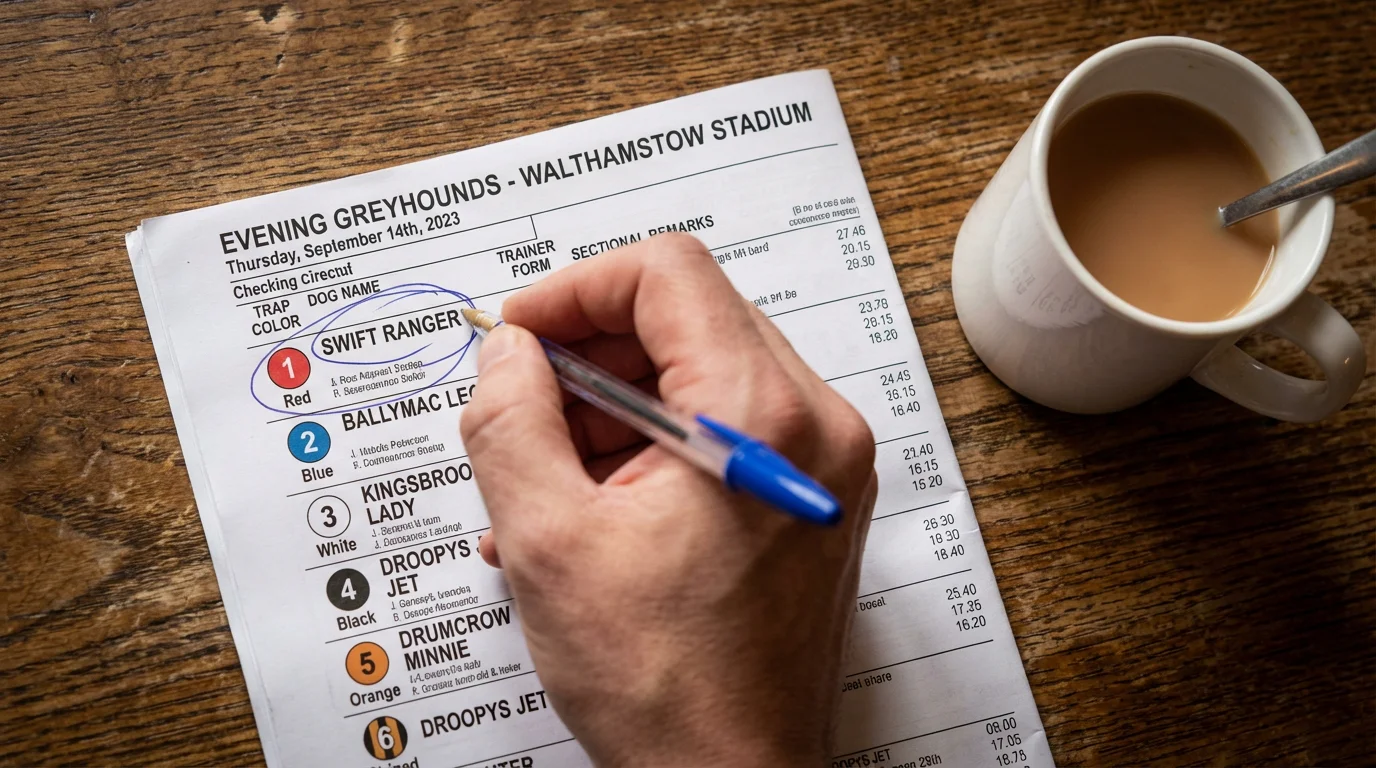
The meat of the racecard is the form section: six lines representing the dog's last six races. Each line contains the date, track, distance, trap drawn, sectional time, positions at each bend, finishing position, beaten distance, the winner or runner-up of that race, race remarks, the winning time, going correction, calculated time and grade. Reading across a single line gives you a snapshot of one race. Reading down all six lines gives you a story — is this dog improving, declining, consistent or erratic?
The remarks column deserves special attention. These abbreviated running notes record what happened during the race: whether the dog broke quickly or slowly, was crowded at the first bend, led or challenged, and how it finished. A dog whose last three remarks all include "Crd1" has had persistent first-bend trouble, which tells you something about its draw or running style relative to the opposition. A dog with "Led" appearing repeatedly is a confirmed front-runner whose chance depends on getting a clear break.
Form Figures and What They Tell You
Recent form is a diary, not a crystal ball. The sequence of finishing positions in a dog's last six runs — displayed as a string like 312142 — gives you the quickest possible read on consistency. A dog showing 111211 is a serial winner who has barely been out of the first two. A dog showing 654365 is struggling. Both extremes are straightforward to interpret. The interesting cases sit in between.
A sequence like 321113 shows a dog that started outside the top two, improved into winning form, then had a setback in its most recent run. The question is whether that last 3 was a blip — trouble in running, a poor draw, a step up in grade — or the start of a decline. This is where the full form lines become essential, because the finishing position alone never tells you why. A third-place finish where the dog was crowded at the first bend and ran on strongly is completely different from a third-place finish where the dog led early and faded.
Spotting improvers is one of the most profitable skills in greyhound betting. The classic pattern is progressively better finishes — 543211 — especially when the improvement coincides with a drop in grade or a switch to a more suitable distance. Conversely, deteriorating form — 112345 — may indicate a niggle, fading confidence, or a dog promoted too quickly. Both patterns are visible in the form figures, but only if you read them alongside the grade, distance and running remarks.
One trap that catches inexperienced bettors: a dog whose form line includes a dash or a zero has either been absent or trialled since its last competitive race. Dogs returning from a break should be treated with caution until you understand the reason for the absence.
Racecard Abbreviations Every Bettor Must Know
SAw, QAw, Crd, Bmp — shorthand that separates punters from passengers. The remarks column of a greyhound racecard uses a standardised set of abbreviations to describe what happened during a race. Learn them and you can reconstruct a race from a single line of text. Ignore them and you are betting on finishing positions without understanding the story behind them.
| Category | Abbreviation | Meaning |
|---|---|---|
| Pace | QAw | Quick away — fast start from traps |
| Pace | SAw | Slow away — poor start |
| Pace | VQAw | Very quick away |
| Trouble | Crd | Crowded — squeezed by other runners |
| Trouble | Bmp | Bumped by another dog |
| Trouble | BCrd | Badly crowded — significant interference |
| Trouble | Bblk | Badly baulked — severely impeded |
| Trouble | FcdTCk | Forced to check — had to slow to avoid collision |
| Position | Rls | Rails — ran along the inside rail |
| Position | Mid | Middle — ran in the centre of the track |
| Position | Wide | Ran wide on the bends |
| Running | Led | Led the race |
| Running | Chl | Challenged — pressured the leader |
| Running | EvCh | Every chance — had a clear run but could not win |
| Outcome | RanOn | Ran on — finished strongly in the closing stages |
| Outcome | Fdd | Faded — lost ground in the closing stages |
| Outcome | HldOn | Held on — just managed to keep the lead to the line |
The numbers that follow abbreviations indicate which bend the incident occurred at. "Crd1" means the dog was crowded at the first bend. "Bmp3" means it was bumped at the third. First-bend trouble is the most significant for betting purposes because it often dictates the entire complexion of the race — a dog that loses two lengths at the first bend in a 277-metre sprint has almost no chance of recovering.
Sectional Times and Going Corrections
Split times tell you more than the final clock. The sectional time — usually the time to the first bend, recorded by a photoelectric beam — reveals how quickly each dog broke from the traps and reached the first turn. In a 491-metre race at Central Park, a split time of 4.50 seconds indicates a sharp break, while 4.80 suggests a slow one. The difference of 0.30 seconds might not sound like much, but at greyhound speed it translates to roughly two lengths. That is often the difference between leading at the first bend and being caught in traffic.
Calculated time, or CalcTm, is where results analysis moves from basic to genuinely useful. The raw winning time of a race is affected by the going — the condition of the sand surface on a given night. Damp sand is typically faster; dry, loose sand is slower. The racing manager assigns a going allowance for each meeting, expressed as a correction factor: N (normal), +10 (slow, add 10 to the raw time to get the adjusted figure), or -10 (fast, subtract 10). Calculated time applies this correction to produce an adjusted figure that allows you to compare performances across different meetings.
This matters enormously. A dog that wins in 29.70 on a -20 night has produced a calculated time of 29.90. Another dog that wins in 29.90 on a normal night has produced the same calculated time. Without the adjustment, you would think the first dog was faster — but in reality they performed identically. At Central Park, where weather conditions in Kent can shift between meetings, the going correction is not an academic detail. It is a practical tool that changes which dogs look genuinely fast and which were flattered by the surface.
Star times — marked with an asterisk on form lines — indicate a dog's best recent calculated time. Comparing star times across the runners in a race is one of the quickest ways to identify the fastest dog on adjusted figures. But a word of caution: the fastest dog on paper does not always win. Trap draw, early pace and trouble in running can all override raw speed.
The Trap Draw at Central Park
Trap Draw and Running Style
A wide runner drawn in trap 1 is a collision waiting to happen. The interaction between a dog's preferred running line and its starting position is the single most important pre-race factor, and it is the one that most casual bettors underweight. At Central Park — a track where the run to the first bend on the 491-metre trip is neither particularly short nor long — draw advantage is significant but not absolute, which makes it a good training ground for developing draw-awareness.
Railers are dogs that naturally gravitate towards the inside rail. In traps 1 or 2, they have a short distance to their preferred running line and can often reach the first bend without encountering another runner. In trap 5 or 6, a railer has to cut across the field, risking bumps and checks from dogs running beside it. This mismatch between style and draw is the most common source of trouble in running, and it is visible on the racecard through the race remarks: look for "Crd1" or "Bmp1" in the form of dogs that have been drawn wide of their natural position.
Wide runners are the mirror image. They want clear ground on the outside. Trap 5 or 6 suits them. Trap 1 or 2 forces them to negotiate the rail dogs before finding space. Middle runners are the most adaptable — they can cope with traps 2 through 5 without major disadvantage, though they prefer the central berths.
The racing manager at each track assigns traps based on running style, so the draw is not random. However, in open races and higher-grade competitions, mismatches between style and draw occur more frequently. These mismatches are where sharp bettors find value: a strong dog drawn badly is often pushed out to a bigger price than its ability warrants.
Early Pace and First-Bend Advantage
The dog that leads at the first bend wins more often than any other variable predicts. This is the single most powerful statistical truth in greyhound racing, and it underpins every serious form analyst's approach. In sprint races over 277 metres, the first-bend leader wins approximately 60 to 65 per cent of the time. Even over the standard 491-metre trip, where there is more time for closing runners to make up ground, the first-bend leader retains a substantial advantage.
Why is early position so dominant? Because once a dog establishes the lead at the first bend, it controls the inside line — the shortest route around the track — and forces every other runner to cover more ground. Dogs behind contend with kickback from the sand, reduced visibility of the lure, and the physical effort of racing in traffic. The further back at the first bend, the more obstacles to overcome.
For bettors, this means sectional time comparison is not optional. Before every race, compare the typical first-bend split times of all six runners and identify the dog most likely to lead at the first turn. Then ask: is it drawn in a position where it can use that pace? If the fastest breaker is in trap 1 with a clear advantage, the race is likely a front-running affair. If two dogs with similar split times are drawn side by side, expect trouble — and consider backing a moderate-pace dog in a different part of the draw that can avoid the first-bend scrimmage and run into contention while the pace dogs compromise each other.
Greyhound Grades and Race Classification
From track analysis to betting mechanics — knowing the grade sets the price.
Grades are the league table nobody pins to the wall — they classify dogs from A1 down through D4 based on recent performance.
Open races sit above the grading ladder and attract the highest-quality fields.
A dog dropping in grade deserves attention: it may be facing weaker opposition than it has recently encountered.
Grade movement is fundamental to reading form, because a finishing time means nothing without knowing the class of race.
Types of Greyhound Bets Explained
You do not need complex bets to make money — but you need to understand them all. Greyhound racing offers a wider range of bet types than most people realise, and each one suits a different level of confidence, a different type of race, and a different risk appetite. What follows is a complete guide to every standard bet available on UK greyhound racing.
The win bet is the simplest: you back a dog to finish first. If it wins, you collect your stake multiplied by the odds. If it does not, you lose your stake. A 10-pound win bet at 5/1 returns 60 pounds — your 50-pound profit plus your original stake. Win bets are the foundation of serious greyhound betting because they force you to commit to a clear opinion: this dog will win this race. There is no hedging, no safety net. That clarity of thought is worth cultivating.
A place bet backs a dog to finish in the top two. In a six-runner greyhound race, only the first two places pay out. Place odds are typically offered at a quarter of the win odds. The payoff is lower, but the strike rate is higher. Place betting makes sense when you are confident a dog is competitive but less certain it will actually win.
The each-way bet is two bets in one: a win bet and a place bet on the same dog, at the same stake. Your total outlay is double your unit stake. If the dog wins, both parts pay out. If it finishes second, you lose the win part but collect on the place part. Each-way terms in greyhound racing are typically 1/4 odds for places 1-2.
Forecast bets require you to predict the first two finishers. A straight forecast names them in exact finishing order. A reverse forecast covers both possible orders but costs double. Forecast payouts are typically calculated by the tote pool, not by fixed odds, which means the returns depend on the pool distribution. Forecasts are where greyhound betting starts to separate the casual from the committed, because predicting two dogs correctly requires a deeper reading of the race.
Tricast bets extend the principle to the first three finishers in exact order. A combination tricast covers all six possible finishing orders of your three selected dogs, so it costs six times the unit stake. Predicting the first three in order is hard — which is why the payouts can be enormous. A combination tricast at Central Park can regularly return triple-digit dividends, and in open races with evenly matched fields, four-figure returns are not unheard of.
Beyond the core bet types, bookmakers and tracks offer trap challenge bets (backing a specific trap number to produce the most winners across a meeting), jackpot bets (predicting the winner of six consecutive races), and various specials and ante-post markets on major events. These bets reward pattern recognition, patience and — in the case of jackpot pools — a tolerance for long odds.
WIN BET
Trap 4 at 5/1
Stake: £10
Profit if wins: £50
Total return: £60
When to Use Each-Way vs Win-Only
Each-way is a safety net — but safety nets have a cost. Every time you bet each-way, you are doubling your stake, and the place part only returns a fraction of the win odds. This means each-way betting erodes profit on your winners while cushioning losses on your near-misses. Whether that trade-off makes sense depends entirely on the race.
Each-way adds genuine value in races where the field is competitive and there is no clear favourite. If four or five dogs in a six-runner field have realistic winning chances, the probability that your selection finishes in the top two is significantly higher than the probability it wins outright. In these scenarios, the place insurance is worth paying for because the strike rate on the place component is high enough to offset the extra outlay.
Win-only betting is superior when you have a strong opinion about a single dog. If you have identified a fast-breaking railer in trap 1 with the best calculated time and an ideal draw, a straight win bet is the most efficient use of your bankroll. Going each-way in this scenario just dilutes your profit by committing half your stake to a place payout you are less likely to need.
A practical rule: if you would bet the dog win-only at its current price, do not switch to each-way simply because you are nervous. Each-way should be a tactical choice, not a comfort blanket.
Forecast and Tricast Bets
Picking the order multiplies both risk and reward — forecasts and tricasts separate the casual from the committed.
Straight forecast: first and second in exact order. Reverse forecast: both orders, double the cost.
Combination tricast covers all six possible orders of three selections, costing six times the unit stake.
Forecast
- Predict first two finishers
- Straight or reverse options
- Moderate risk, moderate reward
Tricast
- Predict first three finishers
- Straight or combination options
- High risk, high reward
How Greyhound Racing Odds Work
Odds are a market opinion — not a fact. When a bookmaker prices a dog at 3/1, they are not declaring it has a 25 per cent chance of winning. They are setting a price that reflects the weight of money coming in, their own assessment, and a margin that ensures they profit regardless of the result. Understanding this distinction is the difference between treating odds as gospel and treating them as data you can exploit.
Fractional odds — the traditional UK format — express profit relative to stake. 3/1 means three pounds profit for every one pound staked. 7/4 means seven pounds profit for every four staked. Odds-on prices like 4/6 mean you risk more than you stand to win: six pounds staked to win four. Decimal odds, used on betting exchanges and increasingly on international platforms, show total return including your stake. Fractional 3/1 becomes decimal 4.0. Fractional 7/4 becomes decimal 2.75. Decimal format is mathematically cleaner but less intuitive for punters raised on fractional prices.
The starting price — SP — is the official price at the moment the traps open, determined by the on-course bookmaking market. It acts as the default settlement price for any bet placed without taking a specific fixed price. In greyhound racing, the SP market is thinner than in horse racing because on-course attendance is lower, which means SPs can sometimes be unrepresentative of the true market. This is one reason why taking a fixed price early, when value is available, is generally a better strategy than relying on SP.
Tote pool odds work on a completely different principle. Instead of fixed returns, your payout depends on the total pool of money wagered and how it is distributed. A large pool on the favourite and a small pool on the outsider means an outsider win returns disproportionately more. Tote deductions — the operator's cut — typically run between 13 and 28 per cent depending on the pool type. In thin markets with fewer punters, the tote can deliver bigger returns on outsiders than fixed odds.
The concept that ties all of this together is implied probability. Every price implies a probability of the outcome occurring. Fractional 3/1 implies 25 per cent. Fractional evens implies 50 per cent. Add up the implied probabilities of all six dogs in a race and the total exceeds 100 per cent. That excess is the overround — the bookmaker's built-in margin. A typical UK greyhound race carries an overround between 115 and 130 per cent, higher than horse racing, which means you need sharper selections to overcome the house edge.
Converting 7/2 to Decimal and Implied Probability
Step 1: Fractional odds: 7/2
Step 2: Convert to decimal: (7 / 2) + 1 = 4.50
Step 3: Calculate implied probability: (1 / 4.50) × 100 = 22.2%
Step 4: Your assessment: you believe this dog has a 30% chance of winning based on form analysis
Step 5: 30% is greater than 22.2% — the odds imply the dog is less likely to win than you believe. This is a value bet.
Betting Strategy for Greyhound Racing
Strategy is the line between punting and investing. Everything covered so far — results, racecards, form analysis, odds — is knowledge. Strategy is what you do with it. Without a framework for managing your bankroll, selecting the right races and maintaining discipline, even the sharpest form reading will bleed money through poor staking, emotional decisions and overexposure.
Start with bankroll management. Set aside a specific amount for greyhound betting that you can afford to lose entirely. A sensible flat-staking approach means betting between 1 and 3 per cent of your total bank per bet. This protects you from the inevitable losing runs. Even a profitable bettor with a 30 per cent strike rate at average odds of 3/1 will hit sequences of ten or fifteen consecutive losers. At 2 per cent per bet, you survive comfortably and are still positioned to recover.
Race selection is underrated. Not every race is worth betting on. Morning cards at Central Park feature 12 races, and the temptation is to have a bet on all of them. Resist that. Some races are genuinely unreadable. The discipline of watching three races and betting on one is more profitable than the habit of betting on every race.
Best Odds Guaranteed — BOG — is a promotion offered by many UK bookmakers on greyhound racing. If you take a fixed price and the SP is higher, the bookmaker pays at the higher price. BOG is free value. It costs nothing and protects you from the downside of taking an early price that drifts. If a bookmaker offers BOG on greyhounds, use it.
Finally, keep records. Track every bet: date, track, race, dog, trap, odds taken, stake, result, profit or loss. After 100 bets, review. Where are your winners coming from? Which bet types are profitable? The bettors who keep records outperform those who rely on memory, because memory is biased — it remembers the big winners and forgets the quiet losers.
Pre-Bet Checklist
- Check the trap draw against each dog's running style
- Compare split times across all six runners
- Read the race remarks from each dog's last three runs
- Assess the grade level — has any dog been recently promoted or dropped?
- Set your stake before looking at the odds — do not let the price dictate the size of your bet
Reading Form for Value
Form Analysis: How to Pick a Greyhound
Picking winners is not about luck — it is about reading what is already there. Every piece of data on the racecard is a clue, and the process of form analysis is simply the discipline of reading those clues in the right order, giving each one the appropriate weight, and arriving at an assessment before the traps open. There is no secret formula. There is a method.
The pillars of greyhound form analysis are, in order: trap draw and running style, early pace and sectional times, calculated time and distance suitability, grade context, and trainer form. None works in isolation. A dog with the fastest calculated time is useless if drawn on the wrong side of the track. A dog with an ideal draw loses its advantage if it is slow away and the adjacent dog is a confirmed front-runner. The skill is in weighing these variables against each other.
Start with the trap draw. Look at each dog's running style — is it a railer, a middle runner, or a wide runner? Cross-reference with its trap position. A railer in trap 1 has a clear inside run to the first bend. A railer in trap 6 has to cross the field, massively increasing interference risk. Wide runners want trap 5 or 6. Middle runners are most versatile but still prefer traps 3 or 4.
Next, compare sectional times. Pull up each dog's recent split times and identify its typical first-bend time. If two fast breakers are drawn in adjacent traps, expect crowding. If one has a clear pace advantage, it may lead to the bend and seize the inside line.
Calculated time tells you about ability over the full distance. Compare the best recent CalcTm for each runner. The dog with the fastest adjusted time has demonstrated the highest level of performance, but only if the grade and distance were comparable. A fast CalcTm posted in an A5 race is less impressive than a slightly slower one from an A2. Grade context is essential.
Finally, check the trainer. Some kennels go through hot and cold streaks. A trainer whose dogs have been winning consistently may have a batch in peak condition. Trainer form is the least precise of the five factors but it adds a layer of background information that refines your assessment.
NOTE
Never assume a dog's last winning time equals its ability. Going conditions, trouble in running, and the trap draw all distort raw times. Always compare calculated times, and always read the race remarks before trusting a headline figure.
Bankroll Rules That Actually Work
Set the number before you open the app — bankroll discipline is the single biggest predictor of long-term survival.
Flat staking at 1-3% of your bank per bet protects against losing runs that even profitable bettors experience.
Set daily and weekly loss limits and stop when they are reached.
Where to Watch and Bet on Greyhound Racing
Central Park: Key Races and Track Reputation
Kent's busiest oval has hosted Category One events and trained Greyhound of the Year winners. With your betting framework in place, it is worth understanding what makes Central Park distinctive as a racing venue — because track knowledge is itself a strategic advantage. Central Park's reputation in UK greyhound racing has grown steadily since the track inherited several prestigious competitions from closed venues, and its current standing puts it firmly in the upper tier of British tracks.
The track's flagship event is the Arena Racing Company Cesarewitch, a Category One stayers' competition over 731 metres worth 12,500 pounds to the winner. In January 2026, Mongys Wild delivered a third consecutive Cesarewitch title for champion trainer Mark Wallis — following kennel mate Garfiney Blaze's back-to-back wins in 2024 and 2025 — smashing the track record with a time of 43.64 seconds. That performance — from a dog who has collected the TV Trophy, Golden Jacket, St Leger and Regency among other titles — underlines the calibre of greyhound that Central Park's major events attract. The Cesarewitch was the first Category One competition held in British greyhound racing in the centenary year, and it set the standard for the season ahead.
The Grand National hurdles moved to Central Park from Wimbledon in 2012, bringing decades of history with it. The Springbok, inaugurated in 1937 as the leading novice hurdle event, followed in 2017 after Wimbledon's closure. The Juvenile, an invitation event for the best puppy-status greyhounds in the country, arrived in the same year. These are not minor consolation prizes — they are established competitions with national profiles, and their presence at Sittingbourne reflects the GBGB's confidence in the venue.
Central Park's 2026 Category One calendar also includes the ARC Kent Plate on 28 March, the ARC Kent Silver Salver on 27 June, and the Premier Greyhound Racing Kent Derby on 17 October. The track has committed to free admission for all major finals this year as part of the sport's centenary celebrations. For bettors, these events represent the highest-quality racing that Central Park stages, with fields drawn from the best kennels in the country and ante-post markets that open weeks before the heats begin.
Beyond the headline events, Central Park's regular programme produces competitive graded racing that benefits from a strong pool of local trainers. Names like the Mavrias family, Barry O'Sullivan and David Puddy feature regularly on the card, and the racing manager maintains a well-structured grading system that keeps fields competitive.
Central Park punches above its weight: four Category One finals per year, the ARC Cesarewitch as a flagship stayers' event, national media coverage through the SIS and Entain networks, and a commitment to free admission for major finals in the 2026 centenary season.
FAQ
How do I read a greyhound racecard and form guide?
A greyhound racecard contains the race header (time, distance, grade), six runners with trap numbers, names, trainers and breeding, and six lines of form data for each dog. Each form line records the date, track, distance, trap drawn, split time, bend positions, finishing position, beaten distance, race remarks and calculated time. Start by reading the form figures — the string of recent finishing positions — to assess consistency. Then examine the split times to identify the fastest breaker. Check the race remarks for any recurring trouble, such as crowding or slow starts. Finally, compare calculated times across the field to identify the dog with the strongest adjusted performance. Reading a racecard becomes faster with practice, and it is the single most valuable skill in greyhound betting.
What are the main types of bets in greyhound racing?
The core bet types are win (back a dog to finish first), place (back it to finish in the top two), each-way (a combined win and place bet at double the stake), forecast (predict the first two finishers in exact order or either order via a reverse forecast), and tricast (predict the first three in exact order, or in any order via a combination tricast). Beyond these, bookmakers offer trap challenge bets, jackpot pools covering six consecutive races, and ante-post markets on major events. Each bet type suits a different level of confidence and a different race scenario. Win bets suit strong opinions, each-way suits competitive fields, and forecasts and tricasts reward deeper form analysis with larger potential returns.
What does Best Odds Guaranteed mean for greyhound bets?
Best Odds Guaranteed, commonly shortened to BOG, is a promotion offered by many UK bookmakers. It means that if you take a fixed price on a greyhound before the race and the starting price turns out to be higher, the bookmaker will pay you at the higher price. For example, if you back a dog at 5/1 and the SP drifts to 7/1, you are paid at 7/1. This gives you the upside of price movements without the downside. BOG effectively removes the need to gamble on whether to take an early price or wait for the SP. It is free value and there is no reason not to use it whenever it is available. Check each bookmaker's terms, as some apply BOG only to certain meetings or bet types.
Beyond the Finishing Line: What Results Actually Teach You
Results are history. Form is the argument. Your bet is the thesis. That framing captures the relationship between data and decision-making in greyhound racing better than any system or shortcut ever could. The results pages at Central Park and every other GBGB track are not an end point — they are raw material. What you do with that material determines whether you are a punter or an analyst.
Greyhound racing rewards a specific kind of attention. The sport runs at volume — Central Park alone stages upwards of 60 races per week — and each race produces a dataset of finishing positions, times, splits, beaten distances and running remarks. No other racing sport generates this density of data with this level of structural consistency. Six runners, same distances, same grading system, same format. The signal-to-noise ratio is better than you will find in horse racing, football accumulators or any other betting medium that relies on larger fields and more unpredictable variables.
The bettors who profit long-term share a common trait: they treat the sport as a discipline, not a pastime. They read racecards before every meeting. They compare calculated times. They track trainer form. They keep staking records. They resist the temptation to bet on every race and instead wait for the races where their analysis gives them a genuine opinion. None of this is glamorous. But the compound effect of consistent process is more powerful than any single tip or hunch.
UK greyhound racing reaches its centenary in 2026 — a hundred years since a dog named Mistley won the first regulated race at Belle Vue in Manchester. The sport has contracted since its mid-century peak, but the racing that remains is faster, more data-rich and more accessible than at any point in its history. The GBGB's 2026 calendar features 50 Category One competitions, and Central Park's share of that programme puts Sittingbourne at the heart of the season. The greyhounds are running. The data is there. The rest is up to you.